
Learn, compare and discover products that suit your interests.
Before buying a natural product, you may want to know where it comes from, how it is processed and what to look for when assessing its quality. This encyclopedia brings that information together in a clearly organised knowledge section, with direct links to relevant products in our shop.
Go directly to the encyclopedia entries:
More articles on this page – jump to a section:
All encyclopedia entries at a glance
Discover informative articles about distinctive plants, mushrooms and natural substances such as fly agaric, chaga, shilajit, kanna, blue lotus, cordyceps and reishi. Our plant encyclopedia offers clear information on their origins, history, quality characteristics and traditional uses, with links to relevant products in our shop.
Mushrooms & functional mushrooms
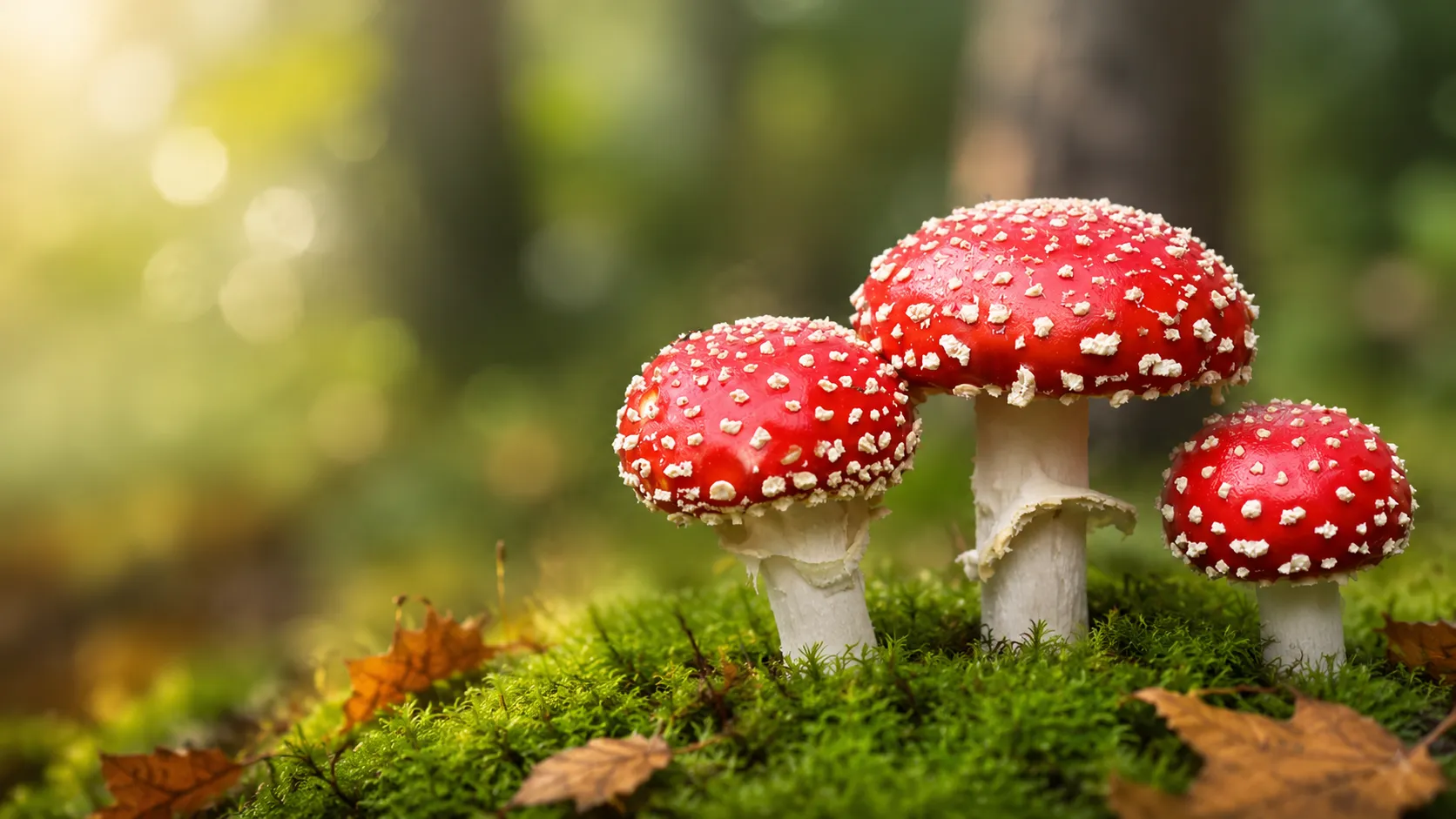
Fly agaric (Amanita muscaria)
The iconic mushroom with its red cap and white spots is deeply rooted in European cultural history. A fascinating natural phenomenon with a long tradition.
Mehr über Fliegenpilz erfahren
Royal fly agaric (Amanita regalis)
This rare, golden-yellow relative of the fly agaric stands out with its majestic appearance and distinctive characteristics.
Mehr über Königs-Fliegenpilz erfahren
Panther cap (Amanita pantherina)
With its brown cap and characteristic white spots, it is one of the most striking mushrooms in our forests. An interesting subject for mycological study.
Mehr über Pantherpilz erfahren
Chaga (Inonotus obliquus)
The black “diamond of the forest” grows mainly on birch trees in cold climates. It has been known in the traditional folklore of Northern Europe and Siberia for centuries.
Mehr über Chaga Pilz erfahren
Cordyceps (Cordyceps militaris)
An unusual mushroom from the high mountain regions of Asia with a fascinating life cycle. Highly valued in traditional Chinese culture.
Mehr über Raupenpilz erfahren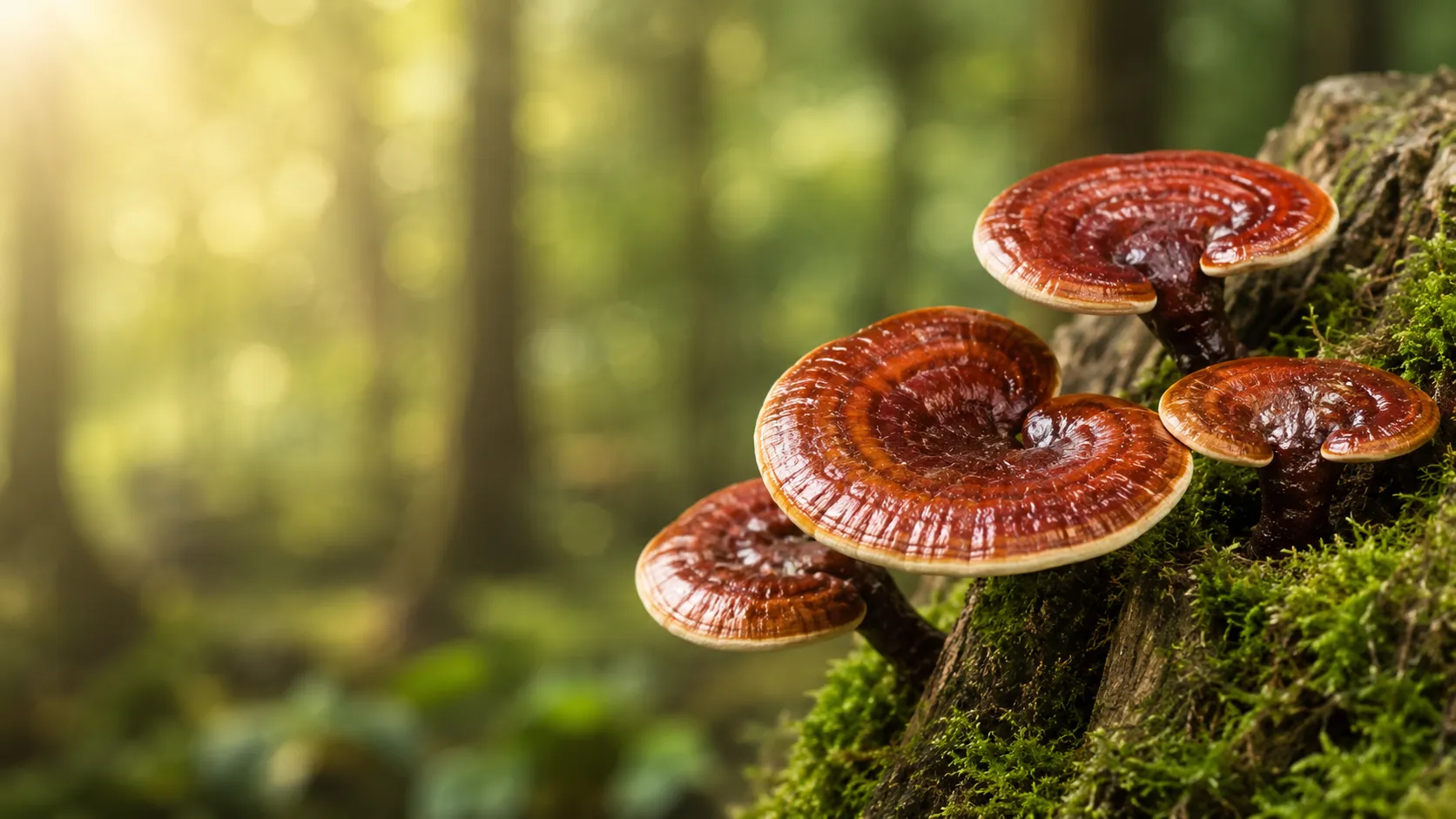
Reishi (Ganoderma lucidum)
The “mushroom of immortality”, with its characteristic varnished surface, has been part of Asian tradition for thousands of years.
Mehr über Reishi erfahren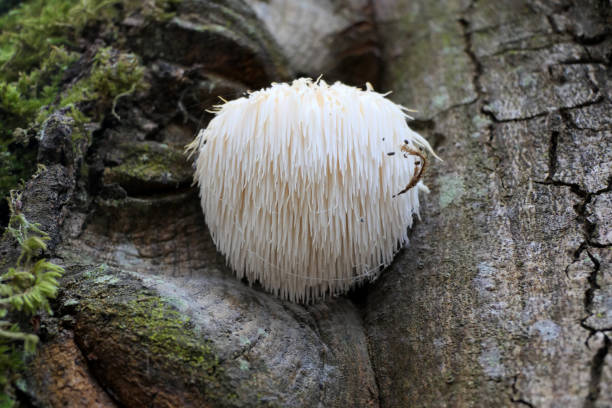
Lion’s mane (Hericium erinaceus)
Its distinctive, mane-like appearance makes lion’s mane unmistakable. A culinary and traditional highlight of Asian mushroom culture.
Mehr über Lions Mane erfahrenShiitake (Lentinula edodes)
One of the world’s most popular edible mushrooms, known for its aromatic flavour. Cultivated in East Asia for over 1,000 years.
Mehr über Shitake erfahren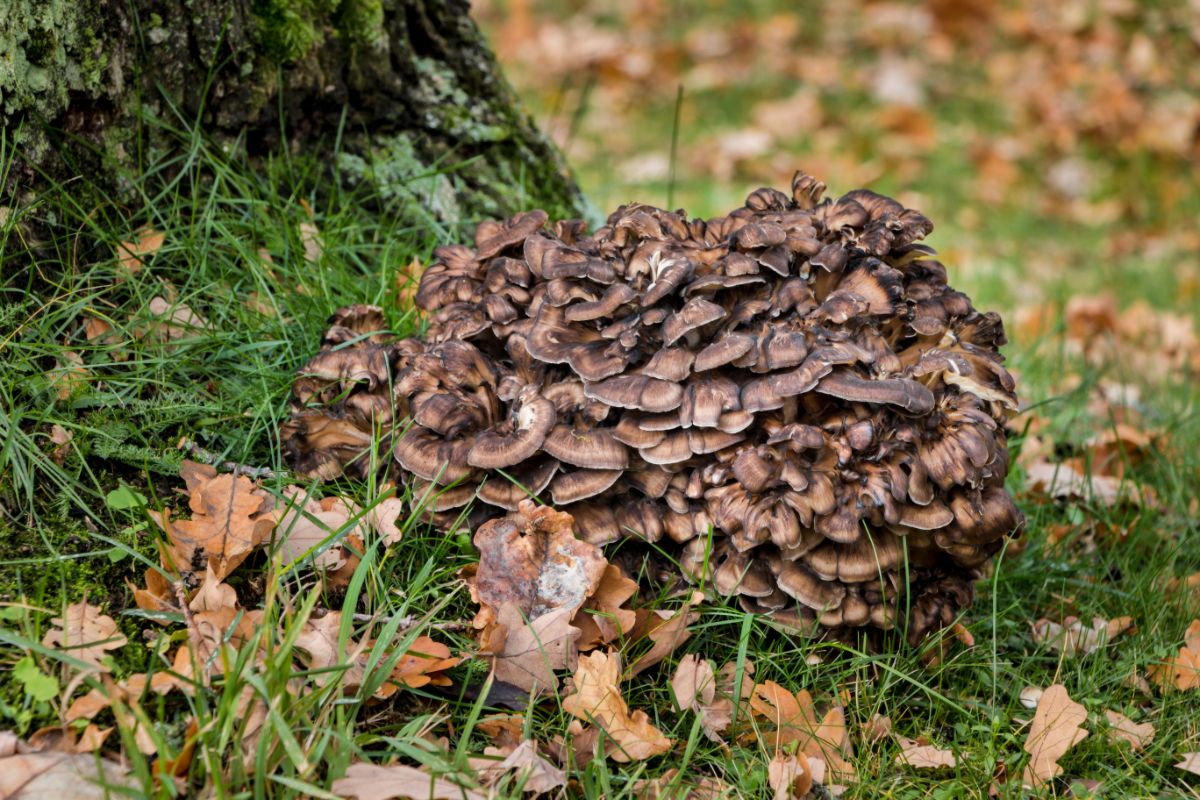
Maitake (Grifola frondosa)
Maitake, the “dancing mushroom”, forms impressive, flower-like fruiting bodies. Traditionally highly valued in Japan and versatile in the kitchen.
Mehr über Maitake erfahren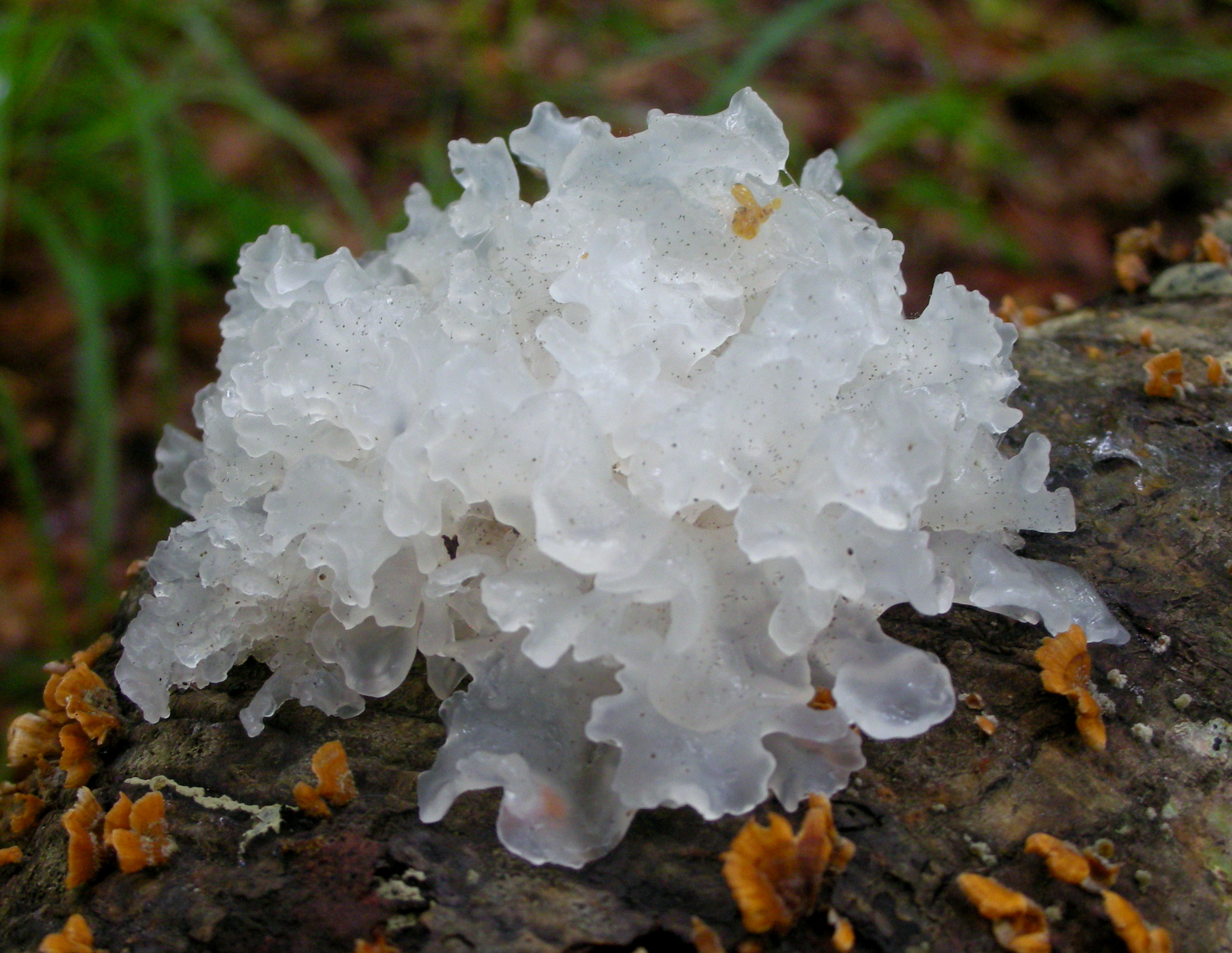
Snow fungus (Tremella fuciformis)
The delicate “snow mushroom” has a translucent, jelly-like structure. It has long been used in Asian cuisine and cosmetic traditions.
Mehr über Tremella erfahren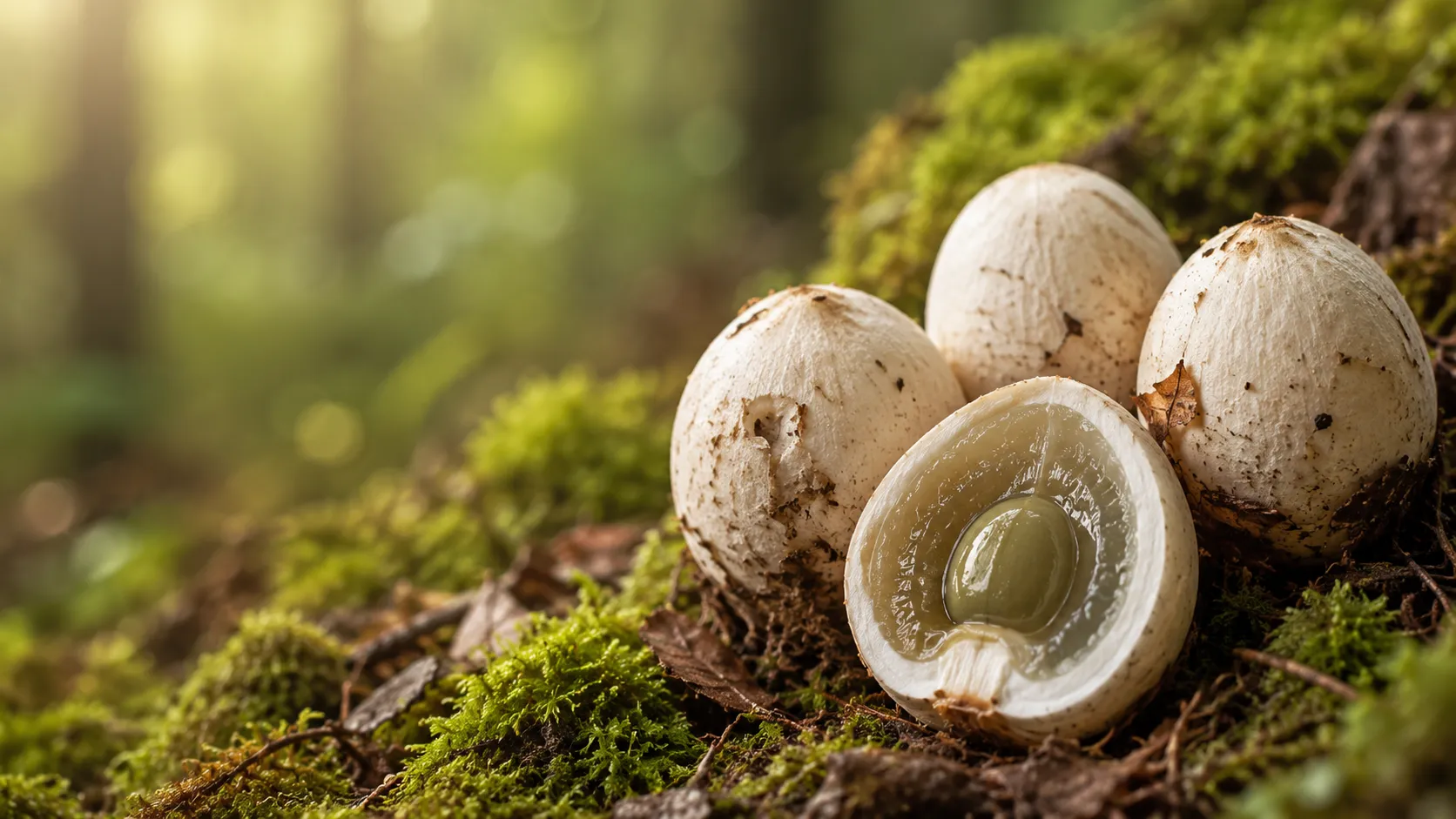
Witch’s egg (Phallus impudicus)
The early developmental stage of certain mushroom species bears this mystical name. A fascinating phase in the life cycle of stinkhorns.
Mehr über Hexenei erfahren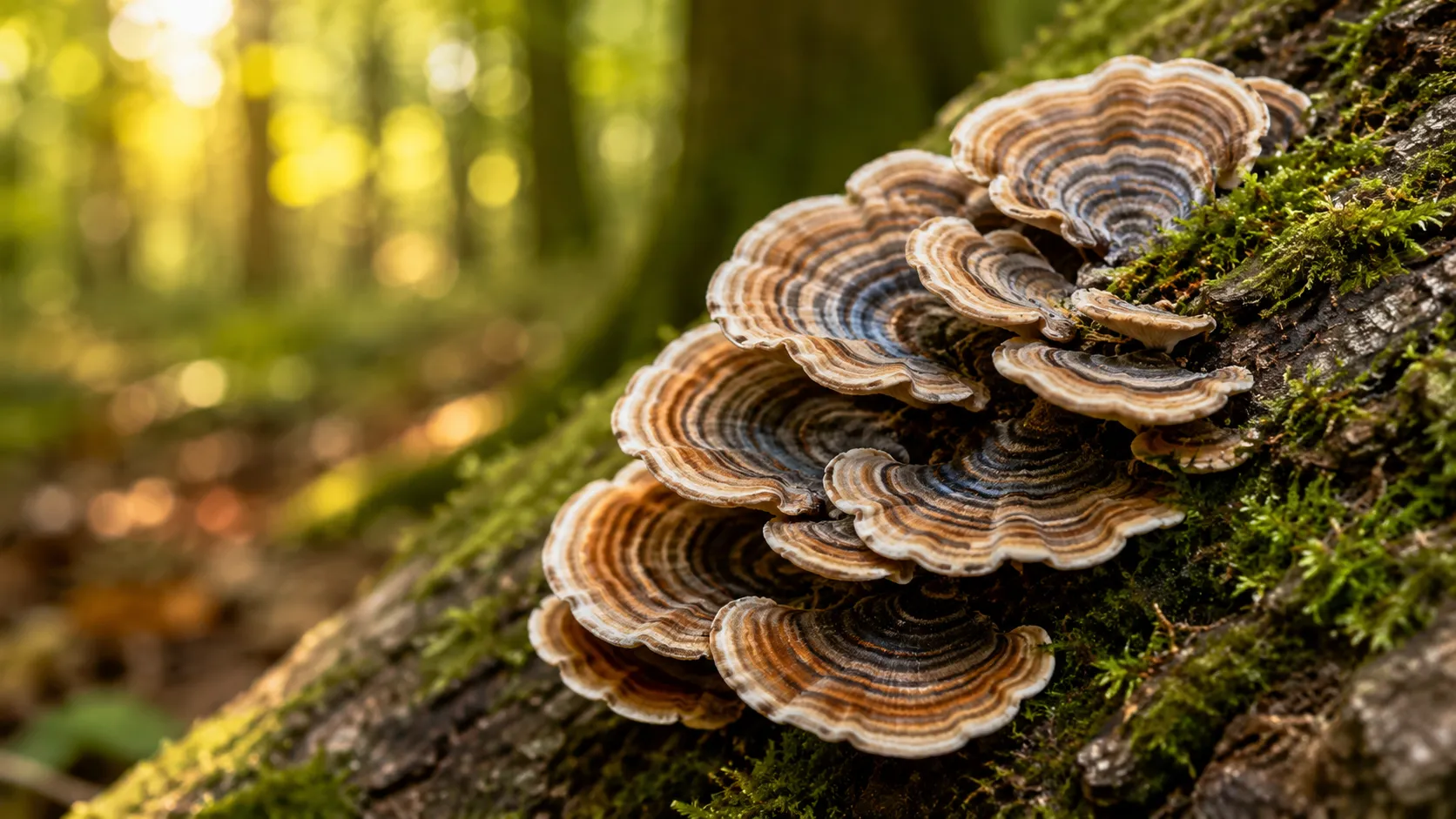
Turkey tail (Trametes versicolor)
Its colourful, concentric rings make it a striking sight. Found worldwide and known in the folk medicine of various cultures.
Mehr über Schmetterlingstramete erfahren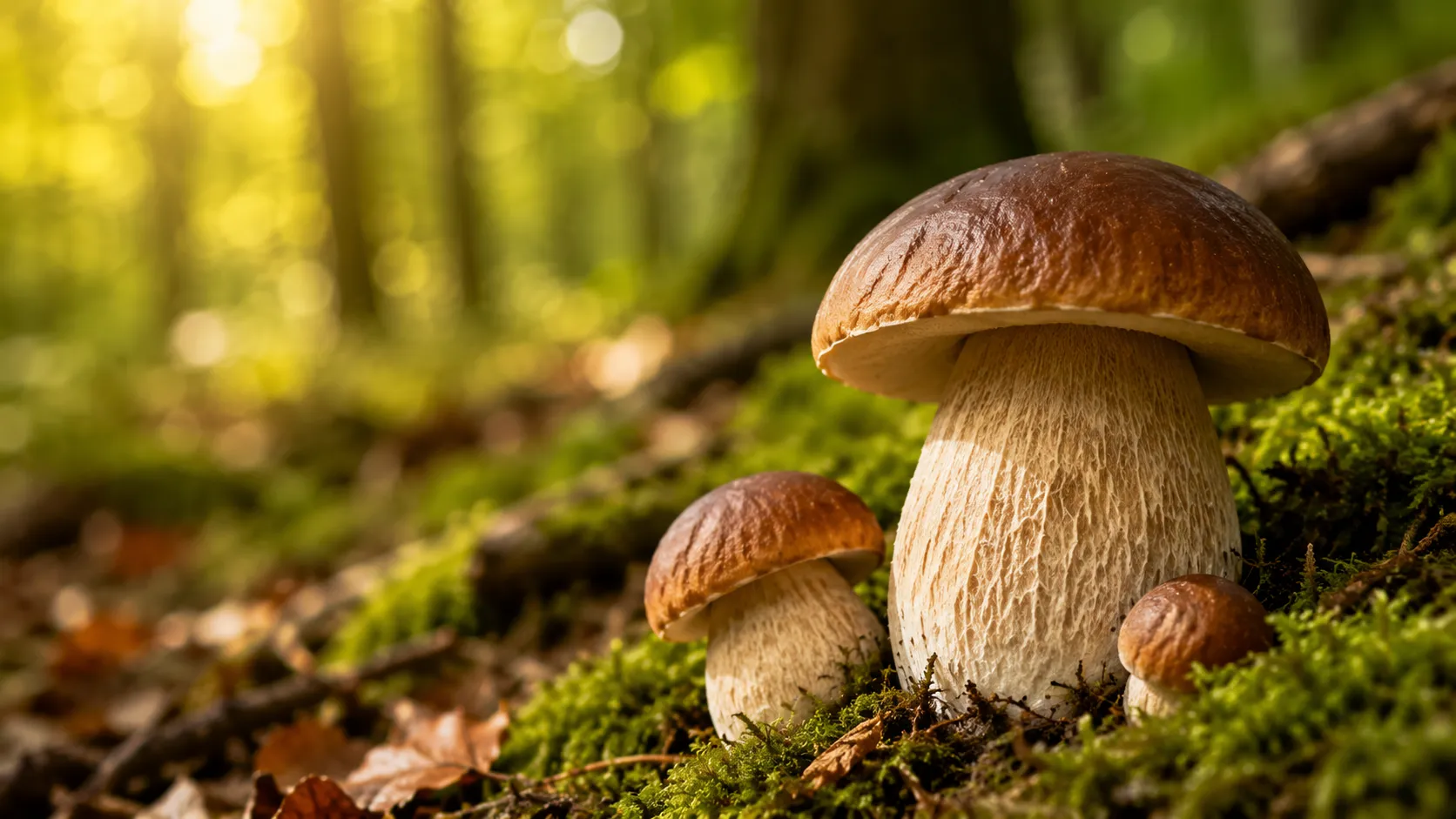
Porcini (Boletus edulis)
The king of edible mushrooms, with a nutty aroma. Native to European forests and highly valued in cooking.
Mehr über Steinpilz erfahren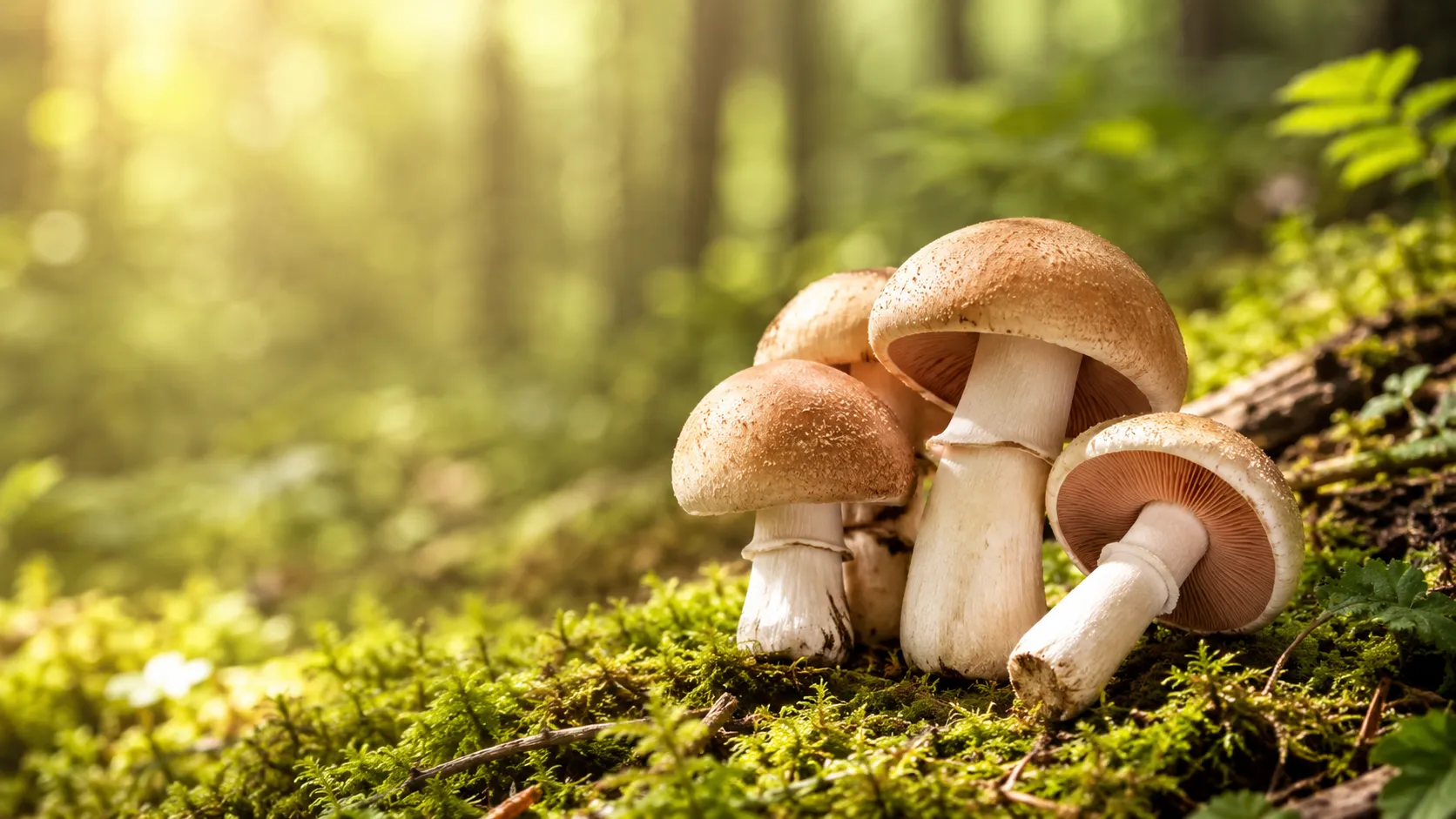
Royal sun agaricus (Agaricus subrufescens)
Royal sun agaricus, also known as the sun mushroom or almond mushroom, is an aromatic edible mushroom from South America. Traditionally valued, it is now a well-known functional mushroom.
Mehr über Sonnenpilz erfahren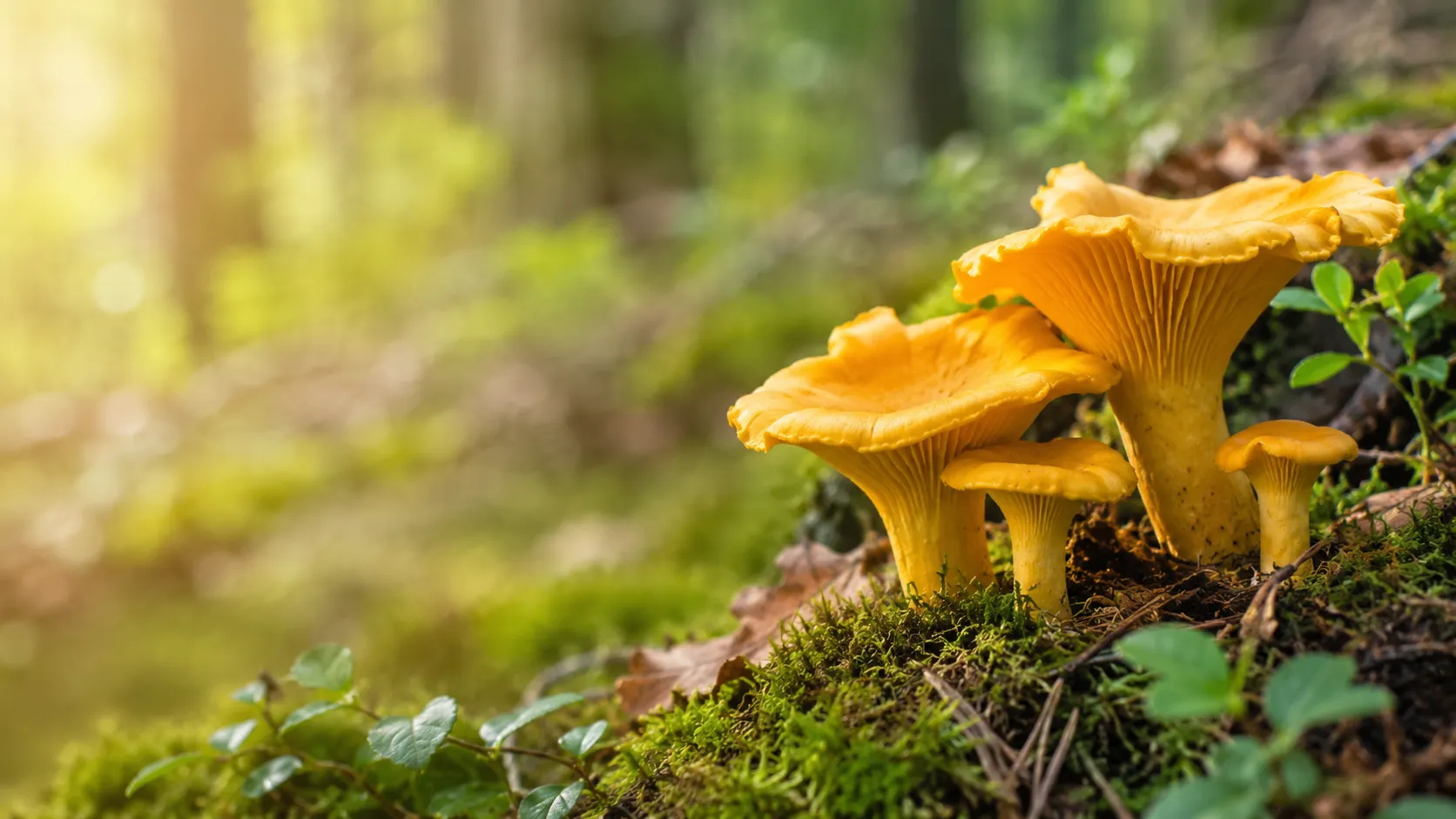
Chanterelle (Cantharellus cibarius)
The golden-yellow chanterelle, with its fruity aroma, is a forest treasure. A popular edible mushroom with a distinctive flavour.
Mehr über Pfifferling erfahren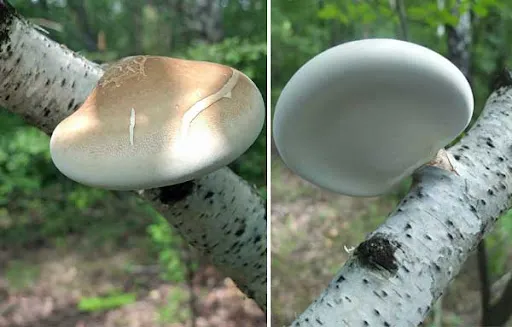
Birch polypore (Fomitopsis betulina)
A tree fungus with a long history in European folklore. It was also found among the belongings of Ötzi the Iceman.
Mehr über Birkenporling erfahren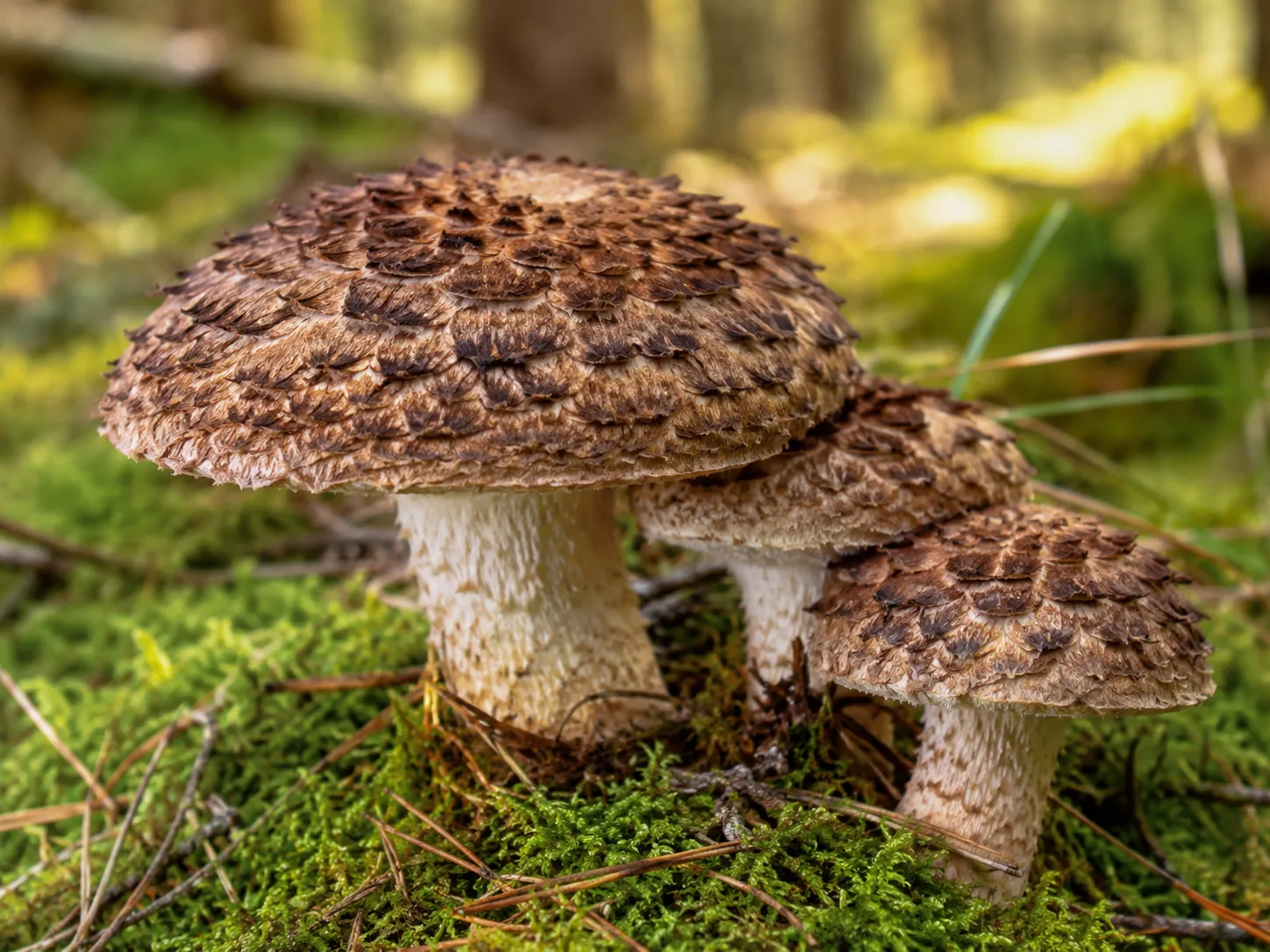
Scaly hedgehog (Sarcodon imbricatus)
A rare edible mushroom with a scaly surface and mild flavour. Found in older coniferous forests.
Mehr über Habichtpilz erfahren
Herbs & plants
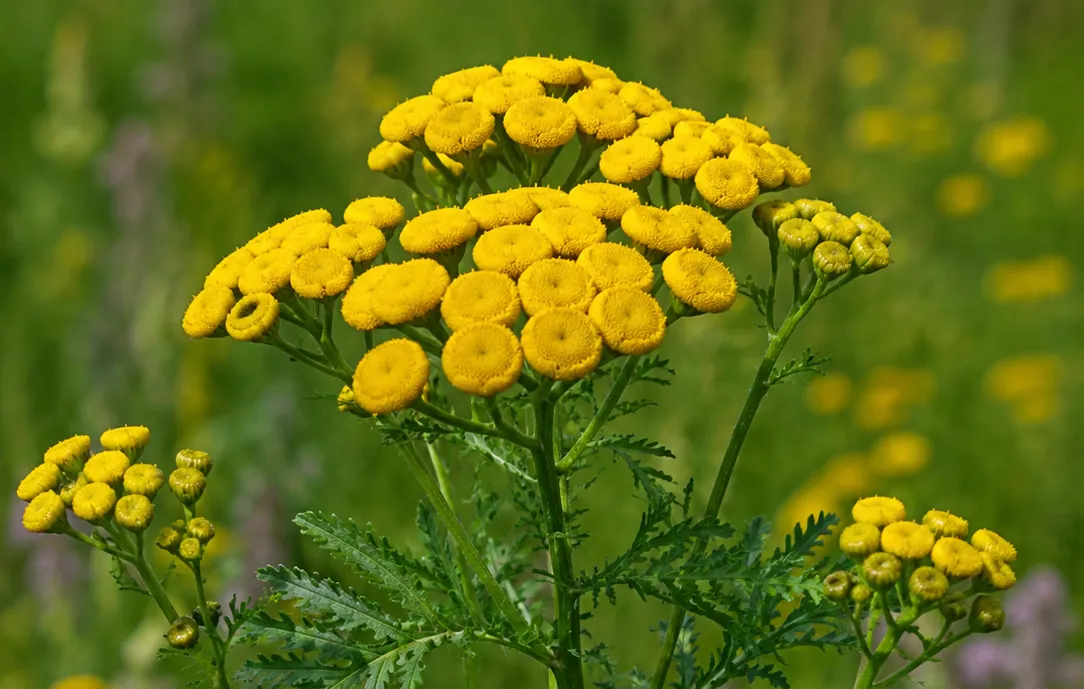
Tansy (Tanacetum vulgare)
A long-established wild plant with bright yellow flowers and an aromatic scent. Documented in European herbal traditions for centuries.
Mehr über Rainfarn erfahren
Wormwood (Artemisia absinthium)
The silvery-green bitter herb with a distinctive aroma. One of the oldest cultivated plants, with a rich history.
Mehr über Wermut erfahren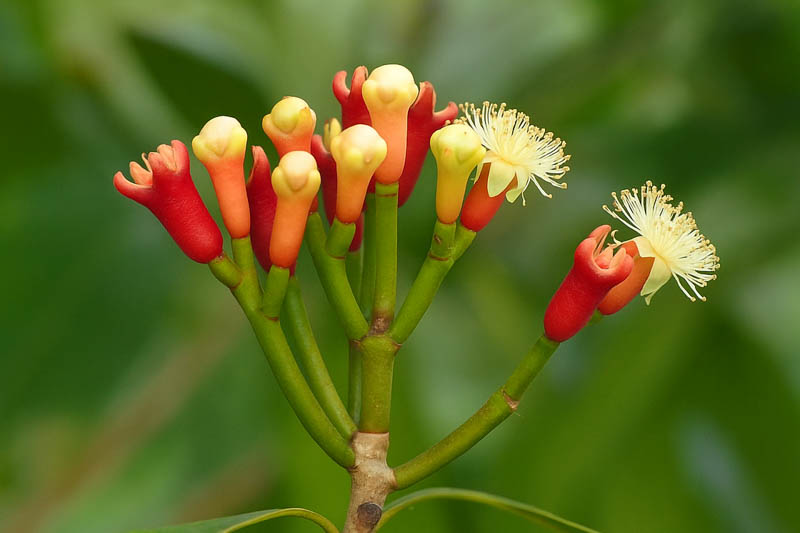
Cloves (Syzygium aromaticum)
Aromatic flower buds with an intense, spicy scent. Valued as a spice and in various traditions since ancient times.
Mehr über Nelken erfahren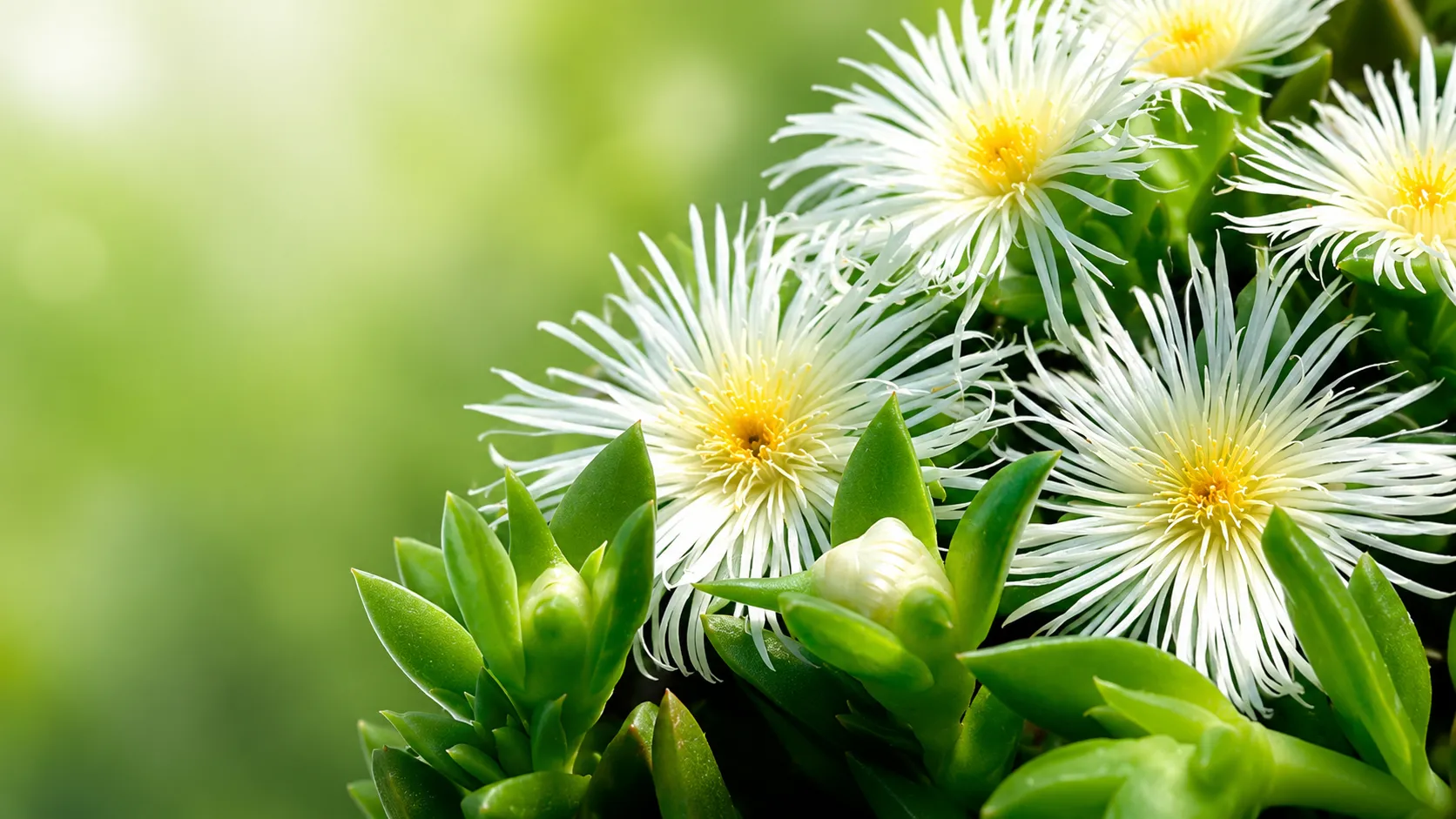
Kanna (Sceletium tortuosum)
A succulent plant from South Africa with a long tradition among indigenous peoples. Botanically known as Sceletium tortuosum.
Mehr über Kanna erfahren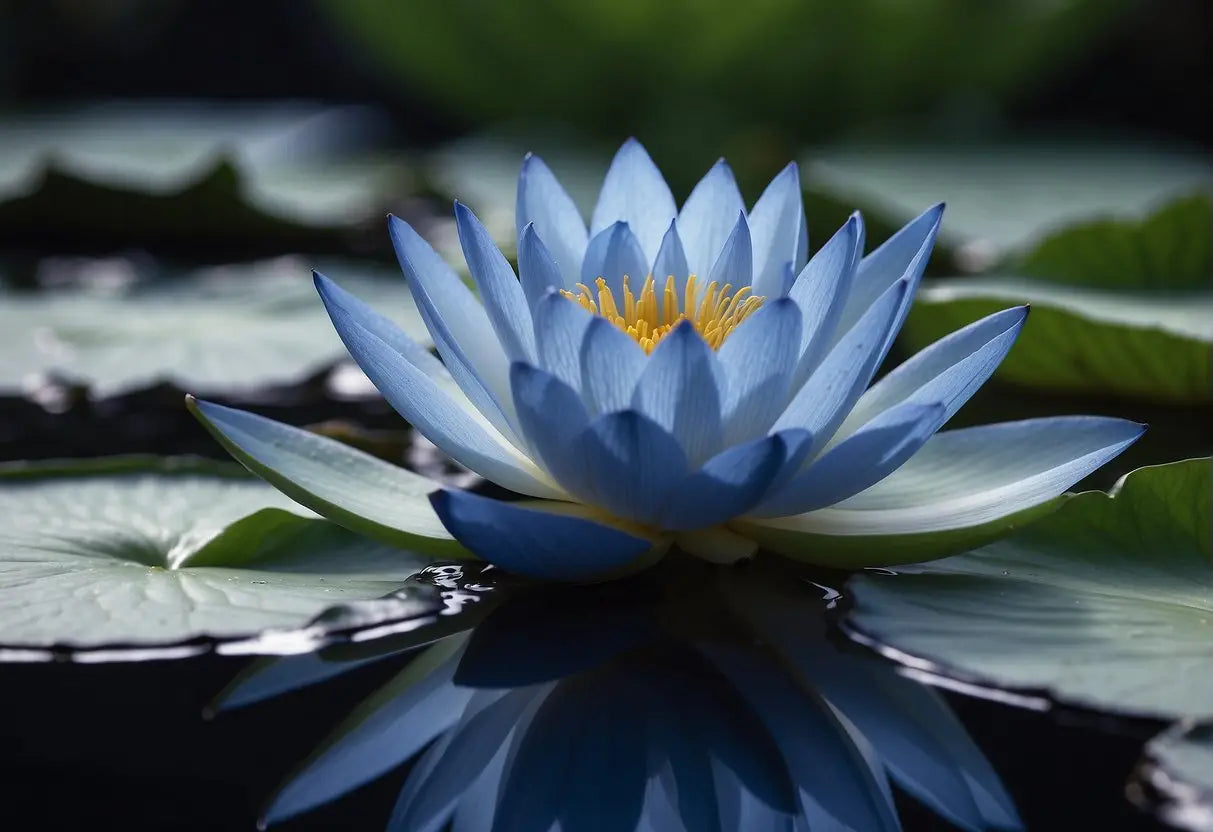
Blue lotus (Nymphaea caerulea)
The sacred water lily of ancient Egypt, with delicate blue flowers. Spiritually significant in ancient cultures.
Mehr über Blue Lotos erfahren
Muira puama (Ptychopetalum olacoides)
Also known as potency wood, this tree comes from the Amazon region. Traditionally used in Brazilian folk medicine.
Mehr über Potenzholz erfahren
Resins & special natural substances
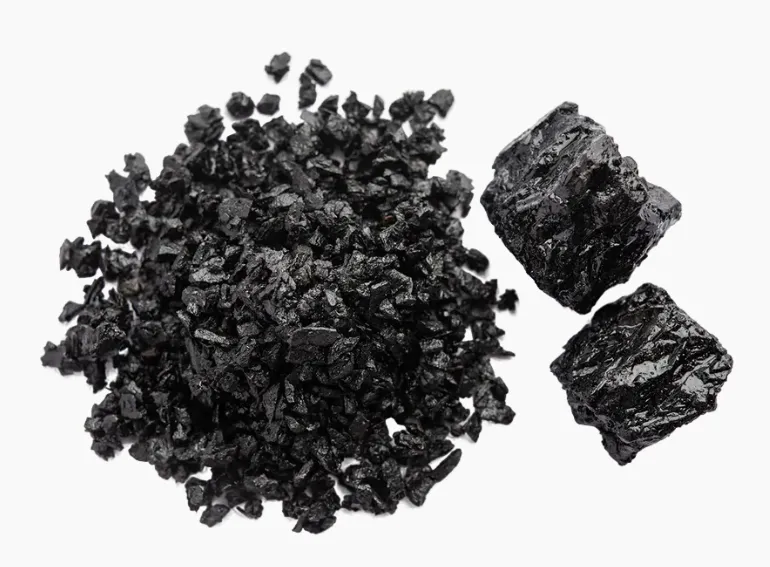
Shilajit / Mumijo
A mineral-rich resin from Asia’s high mountain regions that forms over thousands of years. Highly valued in Ayurveda and the traditional medicine of Central Asia.
Mehr über Shilajit erfahren
Shiitake (Lentinula edodes)
Shiitake is one of Asia’s best-known edible and functional mushrooms. It has been valued for centuries for its aromatic flavour, distinctive constituents and cultural significance. In modern mushroom studies, Lentinula edodes is associated particularly with traditional diets, natural history and the growing interest in high-quality mushroom extracts.
Shiitake, known by its scientific name Lentinula edodes, is one of the world’s best-known cultivated mushrooms. In German it is called Shiitake and is sometimes also referred to as the Japanese forest mushroom or Pasania mushroom. It originally comes from East Asia, particularly Japan, China and Korea, where it has long been used both as an edible mushroom and as a traditionally valued natural substance. Today, shiitake is found worldwide and, alongside button and oyster mushrooms, is one of the most important cultivated edible mushrooms.
In the wild, shiitake prefers dead or weakened hardwood. The name “shiitake” combines the Japanese word “shii”, referring to a particular type of tree, with “take”, meaning mushroom. The name itself reflects its close connection with wood and traditional forest culture. Shiitake typically has a brown, slightly convex cap whose surface may be smooth or somewhat scaly, depending on its age and growing conditions. The stem is usually lighter, firm and fibrous. Its scent is often described as spicy, earthy and pleasantly aromatic. Shiitake is especially known for its intense umami flavour, which has made it popular in Asian cuisine for centuries.
The traditional use of shiitake is particularly deeply rooted in Japan and China. In East Asian cuisine, the mushroom was valued both for its taste and as part of a balanced diet. Traditional Chinese herbal knowledge and Japanese natural history often associated shiitake with vitality, balance and inner strength. Historically, it was used in soups, broths, rice dishes, vegetable preparations and dried form. Dried shiitake was particularly valuable because it kept well and could develop an even more intense aroma through drying.
Its constituents are an important reason for modern interest in shiitake. Lentinula edodes contains various natural components, including polysaccharides, dietary fibre, amino acids, minerals and secondary fungal compounds. The polysaccharide lentinan is frequently mentioned in connection with shiitake and is studied for its biological properties. Beta-glucans also play an important role in modern mushroom research. This group of substances occurs in various functional mushrooms and is often discussed in relation to the immune system, cellular protection and general resilience. Such associations should not be understood as promises of a cure, but as subjects of traditional knowledge, the modern study of natural substances and scientific research.
Personal accounts often associate shiitake with well-being, mindful eating and natural vitality. Many people are interested in shiitake both as an edible mushroom and as a mushroom extract, because extracts may contain certain groups of constituents in a more concentrated form than ordinary mushroom powder. An important distinction is that an extract is not a medicine and does not replace medical advice. Shiitake nevertheless attracts considerable interest among people exploring traditional mushrooms, natural substances and high-quality plant and mushroom products.
Origin, processing and quality are particularly important for shiitake products. Relevant factors include clean raw material, gentle drying, careful processing, appropriate storage and clear product labelling. For mushroom extracts, extraction quality is especially significant because it can make specific groups of constituents more readily available. Purity, scent, colour and suitable packaging may also provide useful indications of product quality.
Our shop offers carefully selected shiitake products with a focus on clear labelling, high-quality processing and a practical capsule format.
View shiitake Lentinula edodes extract in the shop: https://fliegenpilz-kaufen.de/en/products/shiitake-lentinula-edodes-extrakt-60-kapseln-x-500mg
Modern uses of shiitake are varied. In cooking, it is used fresh, dried or as a powder. In the study of natural substances, it often features in mushroom encyclopedia entries, functional mushroom blends, capsules and extracts. People interested in traditional mushrooms frequently encounter shiitake alongside reishi, maitake, cordyceps, chaga or hericium. Each has its own profile of constituents, cultural significance and traditional uses. Shiitake has a distinctive role because it is firmly established in both cuisine and natural history.
Scientific studies explore which shiitake constituents might be responsible for particular effects. Research focuses on polysaccharides, beta-glucans and other characteristic fungal compounds. In traditional use, shiitake is often described in terms of strengthening, balance and support for general well-being. Personal accounts also occasionally describe it as a valuable natural substance within a mindful diet. These statements are based on tradition, personal experience or general research interest and must not be understood as established medical effects.
Although shiitake is a familiar and widespread edible mushroom in many countries, concentrated products such as extracts should be approached thoughtfully. Some people may be sensitive to mushrooms. Skin reactions or intolerances have occasionally been reported with shiitake, particularly in sensitive individuals or following inappropriate use. Anyone with allergies or chronic conditions, anyone who is pregnant or breastfeeding, and anyone taking medication regularly should seek professional advice before using such products. Particular care is also appropriate for children and especially sensitive people.
Several factors influence the quality of a shiitake product: the mushrooms’ origin, cleanliness of cultivation, drying method, milling or extraction, and storage before and after processing. A high-quality shiitake extract should be stored away from moisture, light and excessive heat. Mushroom products can be sensitive to poor storage conditions, which may affect aroma, colour and their constituent profile. Careful packaging helps preserve quality for as long as possible.
Shiitake occupies a special place in a plant or mushroom encyclopedia. It connects traditional cooking, Asian culture, modern mushroom research and a mindful lifestyle. Its scientific name, Lentinula edodes, is now familiar to many people with a deeper interest in functional and traditional mushrooms. At the same time, shiitake remains an everyday edible mushroom with a long history that does not need to be mystified to be interesting. Its significance lies in the combination of origin, constituents, traditional use and modern processing.
This information is provided for general education, natural history and ethnobotanical context. It is not a recommendation for ingestion, dosage or use and does not replace medical advice. Health effects must not be guaranteed or understood as treatment for diseases. Legal requirements may differ by product form and country. Anyone exploring shiitake, mushroom extracts or other natural substances should learn about quality, possible risks and the applicable legal situation.
If you would like to learn more or view available products, you can find our current selection here:
Browse shiitake Lentinula edodes products: https://fliegenpilz-kaufen.de/en/products/shiitake-lentinula-edodes-extrakt-60-kapseln-x-500mg
Maitake (Grifola frondosa)
Maitake, also known as hen of the woods or the “dancing mushroom”, has a long tradition as a functional mushroom in East Asia. Its fan-shaped growth, aromatic flavour and distinctive constituents make it an intriguing entry in a modern mushroom encyclopedia.
Maitake is a striking edible and functional mushroom with the scientific name Grifola frondosa. In German it is often called Klapperschwamm, while its Japanese name “maitake” is commonly translated as “dancing mushroom”. This poetic name is said to refer to people once being so delighted to find this valuable mushroom that they danced with joy. Whether this interpretation is firmly documented historically or belongs more to folklore already shows how much cultural meaning surrounds maitake: it is both a mushroom and a natural substance with a long history, culinary significance and growing interest in modern natural history.
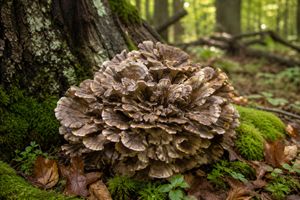
Botanically, or more precisely mycologically, maitake belongs to the polypores. Unlike typical gilled mushrooms, it does not form individual round caps with visible gills. Instead, it usually grows in large, bushy, rosette-like fruiting bodies made up of many thin, fan-shaped lobes ranging from grey-brown to light brown. Viewed from above, maitake resembles a dense, wavy flower or folded leaves. The underside is lighter and has fine pores. This layered, frilly appearance makes Grifola frondosa particularly distinctive and clearly sets it apart from many other mushrooms.
In the wild, maitake prefers the base of old deciduous trees, especially oaks and, less often, other hardwoods. It occurs in parts of Europe, Asia and North America, although its abundance varies by region. Its traditional use is especially well known in Japan and China, where it is regarded both as an edible mushroom and as a valued part of traditional mushroom knowledge. Maitake is also native to Europe, but is not regularly found in the wild everywhere. Today, it is often cultivated for culinary and natural-history purposes, allowing more consistent quality and better availability.
The traditional use of maitake is closely connected with East Asian cuisine and natural history. In Japan, it has long been valued as an aromatic edible mushroom. Its flavour is often described as spicy, earthy, nutty and pleasantly intense. It adds a deep umami-like note to soups, broths, rice dishes and vegetable preparations. Certain traditional uses also associated it with vitality, balance and general well-being. These traditions are part of the mushroom’s cultural history and should not be confused with medical promises of a cure.
Known constituents of maitake include various polysaccharides, including beta-glucans, as well as dietary fibre, protein components, amino acids, minerals and other characteristic fungal compounds. Modern mushroom research frequently discusses maitake in connection with its complex polysaccharide fractions. Scientific studies explore which constituents might be responsible for particular biological properties. Topics include the immune system, metabolism, cellular protection and general vitality. These are subjects of research and must not be understood as established effects or recommendations for use.
Traditional use often associates maitake with inner strength, physical balance and natural resilience. Many personal accounts describe maitake as part of a mindful lifestyle. It is frequently mentioned alongside other well-known functional mushrooms such as reishi, shiitake, cordyceps, hericium and chaga. Maitake therefore has a special place in a modern plant or mushroom encyclopedia: it connects culinary tradition, ethnomycological history and current interest in high-quality mushroom extracts.
Origin, processing and quality are particularly important for maitake products. Key factors include clean raw material, controlled processing, gentle drying and appropriate storage. For mushroom extracts, the care taken during extraction and clear product labelling are also relevant. A high-quality maitake extract should be protected from moisture, light and excessive heat to keep its aroma, colour and constituent profile as stable as possible. Purity, scent and clean packaging are also important quality characteristics.
Our shop offers carefully selected maitake products with a focus on clear labelling, high-quality processing and a practical capsule format.
View maitake Grifola frondosa extract in the shop: https://fliegenpilz-kaufen.de/en/products/maitake-grifola-frondosa-extrakt-kapseln-500-mg
Modern interest in maitake has grown considerably in recent years. Previously known mainly in Asian cuisine, it is now increasingly regarded as a natural substance within the world of functional mushrooms. Mushroom powders and extracts are particularly widespread because they offer a simple, standardised product format. An important distinction is that an extract is not a medicine and does not replace a balanced diet, medical advice or treatment. Rather, it is a concentrated form of a traditional mushroom raw material whose constituents are considered more generally in natural-substance studies and research.
Personal accounts often mention maitake in connection with energy, balance and a mindful approach to natural products. Some people are interested in its traditional uses, others in its constituents or its place among well-known functional mushrooms. Possible effects of maitake are now discussed cautiously: studies investigate whether particular polysaccharides and other fungal components could influence certain biological processes. Such research provides interesting natural-history insights, but does not replace an individual medical assessment.
Even a traditional edible mushroom such as maitake has possible risks and limitations to consider. Mushrooms may cause intolerances in sensitive individuals. Anyone allergic to mushrooms, taking medication regularly, pregnant, breastfeeding or living with chronic conditions should seek professional advice before using concentrated mushroom products. A thoughtful approach is especially important with extracts, as they may contain certain constituent groups in greater concentrations than an ordinary edible mushroom. Additional care is appropriate for children and especially sensitive people.
From a natural-history perspective, maitake is fascinating because it connects several worlds. It is a traditional edible mushroom, a culturally significant natural substance and a modern functional mushroom that appears repeatedly in research and personal accounts. Its German name Klapperschwamm describes its striking, fan-like shape, while the scientific name Grifola frondosa refers to its branching, leaf-like form. Its Japanese name maitake, meanwhile, tells a story of appreciation, joy and longstanding mushroom culture.
This makes maitake particularly interesting for a high-quality mushroom encyclopedia: its origin, constituents, traditional uses and modern processing illustrate the many ways mushrooms can be considered as natural substances. Any account should nevertheless remain factual. Traditional descriptions, personal experiences and scientific interest are valuable sources of information, but must not be understood as promises of a cure. This information is for general education and is not a recommendation for ingestion, dosage or use.
The information provided here is intended solely for general education, natural history and ethnomycological context. It does not replace medical advice and is not intended to diagnose, treat or cure diseases. Legal requirements may differ by country and product form. Anyone exploring maitake, mushroom extracts or other natural substances should learn about quality, possible risks and the applicable legal situation.
If you would like to learn more or view available products, you can find our current selection here:
Browse maitake Grifola frondosa products: https://fliegenpilz-kaufen.de/en/products/maitake-grifola-frondosa-extrakt-kapseln-500-mg
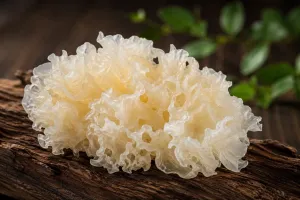
Snow fungus (Tremella fuciformis)
Snow fungus, also known as Tremella fuciformis, is one of East Asia’s best-known functional mushrooms. Its unusual, almost crystalline appearance and long cultural history make it a fascinating natural substance in a modern mushroom encyclopedia.
Snow fungus, known scientifically as Tremella fuciformis, is one of the most unusual edible mushrooms and natural substances in traditional Asian mushroom knowledge. Its pale, almost transparent appearance has given it German names meaning silver ear mushroom, white jelly fungus and snow mushroom. In China it is known as “Yin Er” and has been valued for centuries. Tremella fuciformis has a well-established place in traditional Chinese cooking, natural history and historical accounts.
Snow fungus looks very different from many other mushroom species. Its soft, gelatinous fruiting bodies resemble white flowers or coral and have an elastic, slightly transparent structure. Fresh specimens look almost glass-like, while dried ones appear much lighter and more compact. After soaking, the mushroom expands again and regains its characteristic cloud-like shape.
Tremella fuciformis originates mainly from subtropical and tropical regions of Asia. It has traditionally been cultivated especially widely in China, as well as in Taiwan, Thailand and other parts of Southeast Asia. In the wild, snow fungus prefers dead wood from certain deciduous trees. Interestingly, it often lives in association with other microorganisms and fungi, making it particularly intriguing from a biological perspective.
Traditional use associated snow fungus mainly with well-being, balance and beauty care. Historical Chinese sources describe Tremella fuciformis as a valuable natural substance considered a precious ingredient in certain social circles. In folk traditions, it was often prepared in soups, teas and sweet dishes. Its use in traditional Chinese desserts is particularly well known.
Personal accounts frequently discuss Tremella fuciformis in connection with skincare, moisture balance and general well-being. Some cultures traditionally associated the mushroom with youthfulness and vitality. Today, scientific studies examine, among other things, the distinctive polysaccharides of snow fungus and their possible properties.
The principal known constituents of Tremella fuciformis include complex polysaccharides, dietary fibre, amino acids and various secondary plant compounds. Its water-binding polysaccharides are a particular focus of modern investigations. Scientific studies explore what role these substances might play in certain biological processes. Antioxidant properties are also repeatedly investigated in connection with Tremella fuciformis.
Snow fungus also contains small amounts of various minerals and trace elements. As with many natural substances, its precise composition depends strongly on origin, cultivation method, processing and storage. Quality and purity are therefore important for tremella products.
Gentle processing is especially important for mushroom extracts. High-quality products are often carefully dried and processed under controlled conditions to preserve sensitive constituents as well as possible. The origin of the raw material may also affect quality and purity. Our shop offers carefully selected Tremella fuciformis products with transparent processing information and clearly stated origins.
View tremella (Tremella fuciformis) extract in the shop:
https://fliegenpilz-kaufen.de/en/products/tremella-tremella-fuciformis-extrakt-60-kapseln-x-400mg
Interest in snow fungus has grown considerably outside Asia in recent years. Tremella fuciformis is increasingly discussed in the fields of modern natural substances, functional mushrooms and functional foods. Alongside conventional mushroom extracts, it is now also used in cosmetic products. Some manufacturers draw on the traditional connection between tremella and skincare, incorporating extracts into creams, serums and other care products.
The mushroom is also attracting attention in modern cooking. Its neutral flavour and distinctive texture make it versatile. Tremella fuciformis continues to be used traditionally, particularly in Asian-inspired dishes. At the same time, it remains a fascinating part of ethnobotanical and natural-history collections for many people.
As with many mushrooms and natural substances, attention should be paid to the origin, quality and appropriate processing of snow fungus. Products on the market do not all meet the same standards. Transparent manufacturing information, clean processing and controlled storage are particularly important. Moisture, light and unsuitable storage may affect sensitive constituents.
Although Tremella fuciformis is known as an edible mushroom in many countries, its legal classification may vary by region. People also respond individually to natural substances and mushroom products. Personal accounts occasionally note that sensitive individuals should approach new natural substances cautiously. Pregnant or breastfeeding people and those with existing health conditions should inform themselves and seek professional advice if uncertain.
The traditional uses and cultural accounts described here are provided solely for general information. They are not medical advice, recommendations for ingestion or promises of a cure. Scientific investigations continue to explore the possible properties and significance of individual constituents.
If you would like to learn more about snow fungus or view available products, you can find our current selection here:
Browse Tremella fuciformis products:
https://fliegenpilz-kaufen.de/en/products/tremella-tremella-fuciformis-extrakt-60-kapseln-x-400mg
The information provided here is intended solely for general education, natural history and ethnobotanical context. It is not a recommendation for ingestion, dosage or use. Legal requirements may differ by country. Anyone exploring this natural substance should independently learn about the applicable legal situation and possible risks.
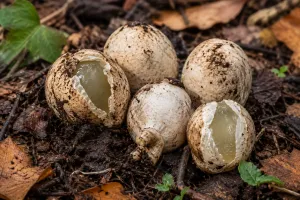
Witch’s egg (Phallus impudicus)
The witch’s egg, the early developmental stage of the common stinkhorn, is one of Europe’s most unusual mushrooms. Its distinctive appearance, cultural significance and the growing interest in traditional natural substances make Phallus impudicus a fascinating entry in modern mushroom encyclopedias.
The so-called witch’s egg is the young developmental stage of the common stinkhorn, scientifically named Phallus impudicus. It is one of Europe’s most striking and mysterious mushroom species, particularly known for its unusual growth form and strong odour when mature. Before the main fruiting body develops, the mushroom first appears as a rounded, whitish structure in the soil: the witch’s egg. This early stage has been described for centuries in folklore, nature observation and traditional mushroom knowledge.
The German name “Hexenei”, meaning witch’s egg, probably comes from old European traditions. Its unusual appearance and rapid growth often linked the mushroom with mystical beliefs in earlier times. Legends and folk stories about the common stinkhorn arose in various parts of Europe. In rural areas in particular, it was regarded as a mysterious woodland mushroom with special symbolism.
Phallus impudicus belongs to the stinkhorn family and is widespread across much of Europe. It also occurs in parts of Asia and North America. It grows particularly often in deciduous and mixed forests, humus-rich soils and relatively undisturbed landscapes with high moisture levels. Its witch’s egg stage usually takes place below or just above the soil surface. Only later does the main fruiting body emerge, potentially developing fully within a few hours.
The witch’s egg itself has a soft to slightly elastic structure and looks like a small egg or tuber. The mushroom’s later structures are already present inside. Many nature enthusiasts and mushroom collectors are particularly interested in this early stage because it differs so clearly from the mature fruiting body.
The common stinkhorn appears in historical accounts from different cultures. In parts of Europe, it was at times regarded as a special woodland mushroom with symbolic meaning. Some regional folk traditions associated it with fertility, the power of nature or particular rituals. Historical uses and cultural interpretations nevertheless varied considerably by country and period.
Phallus impudicus is still discussed in certain natural-history circles, mushroom encyclopedias and ethnobotanical collections. Many people are interested in its distinctive constituents and traditional uses. General natural-history aspects and historical accounts are the main focus.
Known constituents of the witch’s egg or common stinkhorn include various polysaccharides, minerals, amino acids and other natural compounds currently being studied scientifically. Research explores the possible properties of individual constituents and their potential roles in biological processes. Natural substances from mushrooms have attracted increasing research attention in recent years.
Personal accounts often mention people exploring Phallus impudicus out of a general interest in natural history. It is frequently discussed in connection with traditional mushroom knowledge, ethnobotanical uses and historical natural substances. Specific health claims should always be considered cautiously and with appropriate distinctions.
As with many unusual mushroom species, origin, processing and quality are important for the witch’s egg. High-quality raw materials are carefully processed and gently dried to preserve sensitive components as well as possible. Controlled conditions during storage, processing and extract production are essential. Our shop offers carefully selected Phallus impudicus products with transparent origins and gentle processing.
View witch’s egg (Phallus impudicus) extract in the shop:
Modern interest in unusual natural substances has brought increasing attention to less familiar mushrooms such as the common stinkhorn. Interest in traditional uses and historical backgrounds is growing particularly in ethnobotanical research, natural history and modern mushroom encyclopedias. Its unusual appearance also makes Phallus impudicus a fascinating part of European woodland ecosystems.
Certain cultures historically associated the common stinkhorn with various properties. Some traditions mention it in connection with vitality or the general power of nature. Such descriptions are culturally shaped and should not be understood as medical statements. Modern scientific investigations continue to examine mushroom constituents and their possible properties more generally.
The quality of extracts and raw materials is also becoming increasingly important. Many people look for traceable origins, purity and careful processing in mushroom products. Sensitive natural substances may be affected by inappropriate storage or intense heat. Transparent manufacturing processes and controlled conditions are therefore important quality characteristics.
As with many natural substances, legal classifications may differ by region. Not every mushroom is classified in the same way as a food or food supplement in every country. Anyone exploring Phallus impudicus should therefore independently learn about the applicable legal situation. Individual intolerances or personal reactions to natural substances cannot be ruled out either.
The information described here concerns the natural-history, historical and ethnobotanical aspects of the witch’s egg or common stinkhorn. It is provided solely for general information and is not a recommendation for ingestion, dosage or medical use. Scientific studies continue to investigate which constituents might be responsible for particular properties.
If you would like to learn more or view available Phallus impudicus products, you can find our current selection here:
Browse witch’s egg products:
The information provided here is intended solely for general education, natural history and ethnobotanical context. It is not a recommendation for ingestion, dosage or use. Legal requirements may differ by country. Anyone exploring this natural substance should independently learn about possible risks, restrictions and the applicable legal situation.
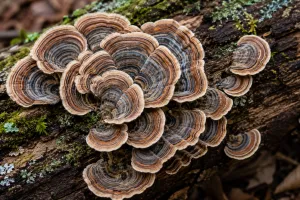
Turkey tail (Trametes versicolor)
Turkey tail is one of the world’s best-known functional mushrooms. Its colourful, fan-shaped structures and long history in traditional mushroom knowledge fascinate nature enthusiasts and modern mushroom researchers alike.
Turkey tail, scientifically named Trametes versicolor, is one of the world’s best-known wood-inhabiting fungi. Its characteristic pattern and concentric colour zones have given it the English name “turkey tail”, because its shape and colouring resemble a turkey’s tail feathers. In German-speaking countries it is mainly known as Schmetterlings-Tramete. It is considered one of the most intensively researched mushrooms in the fields of traditional natural substances and modern mushroom studies.
Trametes versicolor prefers dead hardwood and plays an important role in breaking down organic material in natural woodland ecosystems. It is widespread in Europe, Asia, North America and many other regions. It is particularly often found on tree stumps and fallen branches, and in damp woodlands. Its robust adaptability makes turkey tail one of the world’s most widespread tree fungi.
Trametes versicolor has a distinctive appearance. Its thin, fan-shaped fruiting bodies usually grow in overlapping groups and show striking colour rings in shades of brown, grey, beige, blue or orange. The velvety surface and concentric patterns give it a decorative, almost artistic appearance. Because of its distinctive beauty, turkey tail frequently appears in mushroom encyclopedias and natural-history collections.
The traditional use of Trametes versicolor goes back many centuries. It was historically valued particularly in traditional Chinese and Japanese mushroom knowledge, where it was described in connection with general well-being, vitality and balance. In certain cultures, turkey tail was regarded as a special natural substance used in teas, broths and other traditional preparations.
Trametes versicolor is also frequently mentioned in modern ethnobotanical research. Many people today are interested in traditional functional mushrooms and their historical uses. Personal accounts often associate turkey tail with general support for well-being, balance and natural vitality. Such statements are based mainly on traditional accounts and individual experiences.
The principal known constituents of turkey tail include various polysaccharides, beta-glucans and other bioactive compounds. Certain polysaccharide complexes have been a particular focus of scientific studies for years. Research explores what properties these constituents might have and what roles they might play in biological processes. Trametes versicolor also contains natural antioxidants and other secondary compounds discussed in modern mushroom research.
Scientific investigations explore whether particular mushroom constituents might be associated with immunological processes, cellular protection or other biological functions. Traditional accounts, modern research and individual experiences must, however, be clearly distinguished. The information presented here is intended solely to provide general natural-history context.
Origin, processing and quality are particularly important for Trametes versicolor products. High-quality mushroom products are grown under controlled conditions, carefully dried and gently processed. Sensitive constituents may be affected by unsuitable storage or poor processing. Many people therefore look for transparent origins, purity and traceable manufacturing processes.
Our shop offers carefully selected turkey tail products with clearly stated origins and gentle processing.
Turkey tail (Trametes versicolor) in the shop:
Modern interest in functional mushrooms has grown considerably in recent years. Natural substances from mushrooms attract particular attention among people interested in traditional plant and mushroom knowledge. Trametes versicolor is often discussed in connection with functional mushroom extracts and modern approaches to natural substances. At the same time, turkey tail remains an important part of natural woodland ecosystems, where it fulfils a significant ecological role.
In modern natural history, the mushroom is also a fascinating example of the diversity of wood-inhabiting species. Its resilience and striking appearance make it a popular subject in mushroom photography, woodland studies and biological research. Many mushroom encyclopedias describe Trametes versicolor as one of the best-known examples of traditionally used tree fungi.
As with many natural substances, quality depends strongly on cultivation, harvest timing and processing. Purity and appropriate manufacturing are particularly important for extracts. Many users therefore look for gentle drying, controlled raw-material selection and transparent constituent labelling. Reputable manufacturers also place importance on hygienic storage and traceable production standards.
Despite the great interest in traditional functional mushrooms, information about possible effects should always be considered with appropriate distinctions. Historical uses, cultural traditions and modern research approaches are not automatically medical statements. Although personal accounts often associate turkey tail with particular properties, they do not replace medical advice.
Legal rules may also differ by country. Not every mushroom or mushroom extract is classified in the same way everywhere as a food or food supplement. Anyone exploring natural substances such as Trametes versicolor should therefore independently learn about the applicable legal situation. Individual intolerances or personal reactions to mushroom products cannot be ruled out either.
The information described here is intended solely for general education, natural history and ethnobotanical context. It is not a recommendation for ingestion, dosage or use. Scientific investigations continue to explore which constituents of particular mushrooms might be responsible for possible properties.
If you would like to learn more or view available Trametes versicolor products, you can find our current selection here:
Browse turkey tail products:
The information provided here is intended solely for general education, natural history and ethnobotanical context. It is not a recommendation for ingestion, dosage or use. Legal requirements may differ by country. Anyone exploring this natural substance should independently learn about possible risks, restrictions and the applicable legal situation.
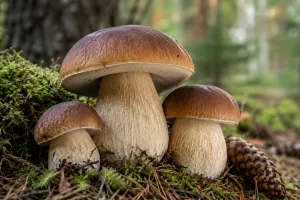
Porcini (Boletus edulis)
Porcini is one of Europe’s best-known and most popular edible mushrooms. With its rich aroma, long culinary tradition and special place in woodland cuisine, Boletus edulis is a classic entry in a modern mushroom encyclopedia.
Porcini, scientifically named Boletus edulis, is one of Europe’s best-known wild mushrooms and has been valued in many countries for centuries. Its intense aroma, firm texture and versatility make it one of the most important edible mushrooms. German regional names include Herrenpilz and Edelpilz. Porcini has a particularly long tradition in European woodland cuisine and continues to appear in many culinary and natural-history contexts.
Boletus edulis belongs to the bolete family and is widespread across much of Europe, Asia and North America. It prefers mixed and coniferous forests and lives in close symbiosis with certain trees, including spruce, pine, beech and oak. This association between fungus and tree is called mycorrhiza and plays an important role in the woodland’s ecological balance.
Porcini has a distinctive appearance, with a stout, pale stem and a smooth brown to chestnut-coloured cap. The underside has fine tubes rather than gills. In young specimens these are usually whitish to cream, turning yellowish to olive-green with age. Young porcini are particularly sought after in the cuisines of many regions.
The origin of high-quality porcini is important. Wild specimens often come from relatively undisturbed woodlands with clean soil and stable ecosystems. Traditional porcini gathering has a long history, particularly in Eastern Europe, Scandinavia and parts of Central Europe. Gathering woodland mushrooms remains an established part of regional culture in many countries.
Porcini has also played a significant historical role. Boletus edulis was valued in European kitchens and traded at markets in earlier centuries. In Italy, France, Poland and other countries, it became an established ingredient in traditional dishes. Dried porcini could be stored for long periods and were considered a valuable pantry ingredient for winter.
Alongside its culinary importance, porcini is now also regarded as an interesting natural substance. It contains natural constituents including polysaccharides, amino acids, dietary fibre, minerals and trace elements. Potassium, phosphorus and certain antioxidant compounds are frequently mentioned in connection with Boletus edulis. Scientific investigations explore the possible properties of individual mushroom constituents.
Personal accounts often associate porcini with natural diets, woodland cuisine and traditional food cultures. In certain cultures it was historically considered a valuable addition to seasonal eating. Such traditions and uses must, however, be clearly distinguished from medical statements.
Quality, origin and processing are particularly important for porcini products. Fresh porcini keep only for a limited time, which is why drying has played a central role for centuries. Gentle drying can largely preserve their characteristic aroma while allowing longer storage. High-quality dried porcini are usually characterised by clean processing, natural origins and careful selection of raw material.
Our shop offers carefully selected premium wild porcini with gentle drying and transparent origins.
View porcini in the shop:
https://fliegenpilz-kaufen.de/en/products/premium-steinpilze-aus-wildwuchs-getrocknet
Modern demand for natural foods and traditional woodland products has further increased interest in porcini in recent years. Dried porcini are particularly popular in fine cooking as an ingredient in risotto, soups, sauces and mushroom dishes. Their intense aroma means they are often used sparingly and highly valued.
Boletus edulis also holds a special place in natural history and mushroom encyclopedias. It symbolises traditional woodland culture and the sustainable use of natural resources. Its popularity also recalls how closely many European cultures were historically connected with forests and seasonal natural substances.
Scientific investigations explore the possible role of natural mushroom constituents in nutrition and biological processes. Traditional use, culinary use and scientific research should be clearly distinguished. Statements about possible effects are provided solely for general information and are not recommendations or medical advice.
As with all wild mushrooms, correct identification is essential for porcini. Various similar bolete species occur in the wild, some of which may be inedible or difficult to tolerate. Wild mushrooms should therefore only be gathered with sufficient expertise. Mushrooms may also absorb environmental substances from the soil, making origin and quality particularly important.
Storage also deserves attention. Dried porcini should be kept dry, clean and protected from light to preserve their quality and aroma as well as possible. High-quality products are usually carefully cleaned and processed under controlled conditions.
The information presented here is intended solely for general education, natural history and ethnobotanical context. It is not a recommendation for ingestion, dosage or use. Historical uses, culinary traditions and modern investigations must be distinguished. Anyone exploring wild mushrooms should always pay attention to quality, origin and appropriate use.
If you would like to learn more or view available porcini products, you can find our current selection here:
Browse porcini products:
https://fliegenpilz-kaufen.de/en/products/premium-steinpilze-aus-wildwuchs-getrocknet
The information provided here is intended solely for general education, natural history and ethnobotanical context. It is not a recommendation for ingestion, dosage or use. Legal requirements may differ by country. Anyone exploring wild mushrooms and natural substances should independently learn about possible risks and the applicable legal situation.
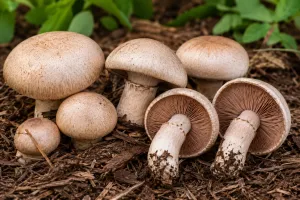
Royal sun agaricus (Agaricus subrufescens)
Royal sun agaricus, also known as Agaricus subrufescens, is one of the best-known functional mushrooms from South America and Asia. Its long traditional use and modern interest in its natural constituents make it a fascinating entry in modern mushroom encyclopedias.
Royal sun agaricus, scientifically named Agaricus subrufescens, is one of the best-known functional mushrooms in modern natural history. In some regions it is also known as the almond mushroom, Brazilian almond mushroom or Agaricus blazei. Its traditional use in South America and Asia and growing scientific interest in its constituents have made it internationally known.
Royal sun agaricus first became particularly well known in Brazil. It prefers warm, humid regions and was traditionally valued in certain rural areas. Interest in Agaricus subrufescens later spread to Japan, China, Europe and North America. Today, it is among the internationally best-known natural substances in the field of functional mushrooms.
Its appearance resembles typical Agaricus species. Characteristic features include a medium to large fruiting body, a pale to slightly brownish cap and gills underneath. Its slightly almond-like scent has also given it the name almond mushroom in some countries. It prefers nutrient-rich soils and is now often cultivated under controlled conditions.
The traditional use of Agaricus subrufescens goes back several decades. It was regarded as a special natural substance in certain regions of Brazil. It later attracted considerable attention in Japan in connection with traditional mushroom knowledge and modern functional mushroom approaches. Many people remain interested in its historical uses, ethnobotanical background and associated traditions.
Traditional use often associates Agaricus subrufescens with general well-being, balance and vitality. Personal accounts frequently discuss it in connection with mindful eating and traditional approaches to natural substances. These descriptions are based mainly on historical accounts, cultural experience or general natural-history perspectives and are not medical statements.
The principal known constituents of royal sun agaricus include various polysaccharides, beta-glucans, amino acids, natural minerals and secondary plant compounds. Its beta-glucans have been a particular focus of scientific investigation for years. Studies explore what properties these compounds might have and what roles they might play in biological processes.
Agaricus subrufescens also contains natural antioxidants and other bioactive compounds discussed in modern mushroom research. Scientific investigations explore which constituents might be associated with particular traditional descriptions. Traditional uses, personal accounts and scientific research must be clearly distinguished.
As with many functional mushrooms, quality, origin and processing are essential. High-quality royal sun agaricus products are cultivated under controlled conditions, carefully harvested and gently processed. Sensitive constituents may be affected by inappropriate storage or intense heat. Many people therefore look for transparent origins, controlled processing and traceable quality standards.
Our shop offers carefully selected royal sun agaricus products with clearly stated origins and gentle processing.
View royal sun agaricus (Agaricus subrufescens) in the shop:
Modern interest in functional mushrooms has grown considerably in recent years. Natural substances from mushrooms are now discussed worldwide in connection with traditional mushroom knowledge, functional foods and ethnobotanical research. Agaricus subrufescens is one of the best-known species in the field of modern mushroom extracts.
Many people are interested both in the traditional background of royal sun agaricus and in its role in modern natural history. Various cultures historically associated it with vitality and natural balance. Such cultural descriptions reflect traditional perspectives and are not established medical statements.
The quality of extracts and raw materials is also becoming increasingly important. Reputable manufacturers focus on clean cultivation, controlled drying and careful processing. Purity and transparent manufacturing conditions are especially important quality characteristics for mushroom extracts. Many users therefore value traceable origins and gentle production methods.
As with all natural substances, possible individual differences should also be considered with royal sun agaricus. People do not all react in the same way to particular mushroom products or constituents. Legal rules may also differ by country. Certain mushroom extracts are classified differently in some regions than in others. Anyone exploring Agaricus subrufescens should therefore independently learn about the applicable legal situation.
The information described here is intended solely for general education, natural history and ethnobotanical context. It is not a recommendation for ingestion, dosage or use. Scientific studies continue to explore which constituents of particular functional mushrooms might be associated with traditional descriptions.
If you would like to learn more or view available royal sun agaricus products, you can find our current selection here:
Browse royal sun agaricus products:
The information provided here is intended solely for general education, natural history and ethnobotanical context. It is not a recommendation for ingestion, dosage or use. Legal requirements may differ by country. Anyone exploring this natural substance should independently learn about possible risks, restrictions and the applicable legal situation.
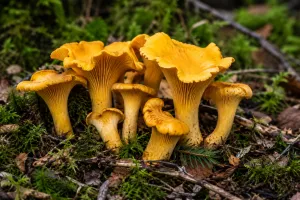
Chanterelle (Cantharellus cibarius)
The chanterelle is one of Europe’s best-known and most popular woodland mushrooms. With its golden-yellow colour, delicate aroma and long culinary tradition, Cantharellus cibarius has a special place in a modern mushroom encyclopedia.
The chanterelle, scientifically named Cantharellus cibarius, is one of Europe’s best-known edible mushrooms and has been gathered and valued in many regions for centuries. Its golden-yellow colour has also given it German regional names such as Eierschwammerl and Reherl. Particularly in Central Europe, the chanterelle has a long tradition as a popular woodland mushroom and remains an established part of seasonal woodland cuisine.
Cantharellus cibarius belongs to the chanterelle family and prefers relatively undisturbed deciduous and coniferous forests. It lives in close symbiosis with various trees, including spruce, pine, beech and oak. This association between fungus and tree is called mycorrhiza and plays an important role in natural woodland ecosystems. Chanterelles often grow on mossy ground, in open woodlands or along damp forest edges.
The chanterelle has a distinctive appearance. Typical features include its golden to egg-yolk yellow colour, funnel-like shape and characteristic ridges under the cap. Unlike many other mushrooms, Cantharellus cibarius has ridges rather than true gills, and these run down the stem. Its scent is often described as fruity or slightly apricot-like.
The origin of high-quality chanterelles is important. Wild specimens often come from relatively undisturbed woodlands in Europe, Eastern Europe or Scandinavia. Gathering chanterelles has a long cultural tradition in many countries. In Poland, Germany, Austria and the Baltic states in particular, seasonal mushroom gathering remains part of woodland culture in many regions.
Historically, chanterelles were valued both in cooking and more generally as a natural substance. In certain cultures, the mushroom symbolised natural woodland cuisine and seasonal eating. Traditional uses included drying, pickling and fresh preparation. Many historical European recipes mention Cantharellus cibarius as a special delicacy.
Known chanterelle constituents include natural dietary fibre, amino acids, minerals and various secondary plant compounds. Potassium, iron and certain antioxidant compounds are frequently mentioned in connection with Cantharellus cibarius. It also contains natural carotenoids associated with its typical golden-yellow colouring.
Scientific studies explore the possible properties of particular mushroom constituents and their potential roles in biological processes. Many natural substances from woodland mushrooms are a focus of modern research. Traditional accounts, personal experiences and scientific investigation must nevertheless be clearly distinguished.
Personal accounts often mention that people particularly appreciate chanterelles for their natural aroma and traditional significance. Certain cultures historically associated them with natural diets and seasonal woodland cuisine. Such cultural descriptions are not medical statements or recommendations.
As with many wild mushrooms, quality, origin and processing are essential. High-quality chanterelles are carefully gathered, cleaned and gently processed. Controlled drying is especially important for dried products to preserve aroma and natural characteristics as well as possible. Appropriate storage also contributes significantly to quality.
Our shop offers carefully selected Cantharellus cibarius products with transparent origins and gentle processing.
View chanterelle products in the shop:
Modern interest in traditional woodland mushrooms has grown considerably in recent years. Many people now explore natural foods, regional natural substances and historical woodland cuisine in greater depth. The chanterelle is one of the best-known representatives of European edible mushrooms.
Cantharellus cibarius also has a special place in natural history and mushroom encyclopedias. Its distinctive appearance, wide distribution and long cultural significance make it one of Europe’s best-known mushrooms. Its popularity also recalls the close connection of many cultures with woodlands and seasonal natural substances.
Chanterelles are used in many ways in modern cooking. They are particularly popular in risotto, sautéed mushroom dishes, sauces and traditional woodland dishes. Their aromatic, slightly peppery flavour makes them a valued ingredient in European cuisine. Dried chanterelles are also often used in aromatic broths and seasoning blends.
As with all wild mushrooms, correct identification is important for chanterelles. Similar mushroom species occur in the wild and may be confused with them. Woodland mushrooms should therefore only be gathered with sufficient expertise. Mushrooms may also absorb environmental substances from the soil, making origin and quality particularly important.
Legal classifications may also differ by country. Anyone exploring natural substances or wild mushrooms should therefore independently learn about the applicable legal situation. Individual intolerances or personal reactions to mushroom products cannot be ruled out either.
The information described here is intended solely for general education, natural history and ethnobotanical context. It is not a recommendation for ingestion, dosage or use. Historical uses, traditional accounts and modern scientific investigations must be distinguished.
If you would like to learn more or view available Cantharellus cibarius products, you can find our current selection here:
Browse chanterelle products:
The information provided here is intended solely for general education, natural history and ethnobotanical context. It is not a recommendation for ingestion, dosage or use. Legal requirements may differ by country. Anyone exploring wild mushrooms and natural substances should independently learn about possible risks and the applicable legal situation.
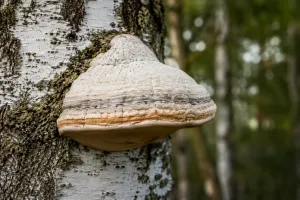
Birch polypore (Fomitopsis betulina)
Birch polypore is one of Europe’s best-known tree fungi and has probably accompanied human history for thousands of years. Its close association with birch trees and long traditional use give Fomitopsis betulina a special place in a modern mushroom encyclopedia.
Birch polypore, scientifically named Fomitopsis betulina, is one of Europe’s best-known wood-inhabiting fungi. It was formerly often listed under the scientific name Piptoporus betulinus. Birch polypore grows almost exclusively on birches and is closely associated with these trees. Its characteristic shape, cultural history and traditional uses make it one of the most interesting natural substances in the mushroom world.
Birch polypore has a striking appearance. The fruiting bodies are usually semicircular to hoof-shaped and grow directly from the trunk or dead birch wood. Young specimens often have a pale, whitish to cream-coloured surface, while older fruiting bodies may become darker and harder. The underside consists of fine pores through which the fungus releases its spores.
Fomitopsis betulina is widespread across much of Europe, Asia and North America. It is particularly common in birch forests, mixed forests and relatively undisturbed landscapes with many birches. It prefers weakened or dead birches and plays an important role in breaking down organic matter in natural woodland ecosystems.
The connection between birch polypore and humans probably goes back a long way. The mushroom became particularly well known through the discovery of the glacier mummy “Ötzi”. Pieces of birch polypore were found with this archaeological discovery, suggesting that people knew and possibly used it thousands of years ago. Historical interpretations differ, however, and many details remain subjects of scientific discussion.
Birch polypore appears in traditional folklore from various European regions. Certain cultures regarded it as a special woodland mushroom with diverse significance. Historical descriptions include craft uses, tinder and natural-history applications. Many traditional accounts focus on its firm structure and long keeping qualities.
Modern natural history is also increasingly interested in birch polypore. Many people explore Fomitopsis betulina because of its ethnobotanical history and distinctive constituents. Personal accounts often associate it with traditional woodland knowledge and historical uses of natural substances. Such descriptions are intended solely for general information and are not medical statements.
Known constituents of birch polypore include various polysaccharides, bitter substances, natural triterpenes and other secondary compounds. Certain bioactive substances are a particular focus of modern scientific investigations. Studies explore the possible properties of these constituents and their potential roles in biological processes.
Fomitopsis betulina also contains natural dietary fibre and other characteristic fungal compounds. Many natural substances from wood-inhabiting fungi are now studied scientifically because they contain complex chemical structures. Traditional uses, natural-history perspectives and scientific research must nevertheless be clearly distinguished.
As with many unusual mushroom species, origin, quality and processing are essential for birch polypore. High-quality raw materials ideally come from relatively undisturbed regions with clean birch stands. Gentle drying and careful processing are particularly important to preserve sensitive components as well as possible.
Our shop offers carefully selected products containing birch polypore and other high-quality mushroom extracts from controlled processing.
View birch polypore products in the shop:
Modern interest in traditional natural substances has grown considerably in recent years. Tree fungi such as Fomitopsis betulina increasingly attract nature enthusiasts, mushroom collectors and ethnobotanical researchers. Many people are now interested both in the historical uses of birch polypore and in its role in Europe’s traditional woodland culture.
Birch polypore is also frequently described in modern mushroom encyclopedias. Its close association with birch trees, striking appearance and cultural significance make it a fascinating representative of Europe’s fungi. It also illustrates how closely nature observation, woodland knowledge and traditional use were historically connected.
Scientific studies explore which tree-fungus constituents might be associated with traditional descriptions. Historical uses and modern research approaches should nevertheless be considered separately. Statements about possible effects are provided solely for general information and are neither promises of a cure nor recommendations.
As with many natural substances, people may differ in their responses to mushroom products. Not everyone reacts in the same way to particular constituents. Legal classifications may also differ by country. In some European countries, certain mushroom extracts or processed forms are not automatically considered foods or food supplements. Anyone exploring Fomitopsis betulina should therefore independently learn about the applicable legal situation.
The quality of raw materials and extracts also deserves particular attention. Reputable manufacturers focus on controlled processing, clean storage and transparent origins. Environmental conditions and careful raw-material selection are important, especially for wild-collected natural substances.
The information described here is intended solely for general education, natural history and ethnobotanical context. It is not a recommendation for ingestion, dosage or use. Historical traditions, personal accounts and modern investigations must be distinguished.
If you would like to learn more or view available products containing birch polypore, you can find our current selection here:
Browse birch polypore products:
The information provided here is intended solely for general education, natural history and ethnobotanical context. It is not a recommendation for ingestion, dosage or use. Legal requirements may differ by country. Anyone exploring this natural substance should independently learn about possible risks, restrictions and the applicable legal situation.
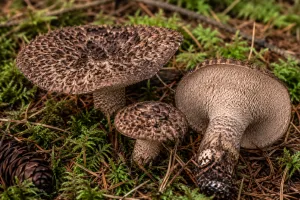
Scaly hedgehog (Sarcodon imbricatus)
The scaly hedgehog is one of the most striking wild mushrooms in European forests. Its scaly surface, distinctive appearance and long natural history give Sarcodon imbricatus a special place in a modern mushroom encyclopedia.
The scaly hedgehog, scientifically named Sarcodon imbricatus, is one of Europe’s most striking tooth fungi. Its dark, scaly cap resembles a hawk’s plumage, which gave it its German name Habichtpilz. It belongs to the tooth fungi because its underside has fine, hanging spines rather than gills or tubes.
Sarcodon imbricatus prefers coniferous forests and is particularly common in regions with pine or spruce. It lives in close symbiosis with particular tree species and plays an important role in natural woodland ecosystems. In Europe, Scandinavia and parts of Northern Asia in particular, the scaly hedgehog is regarded as a traditional woodland mushroom with longstanding natural-history significance.
The scaly hedgehog has a distinctive appearance. Its large, substantial cap usually has dark-brown to grey-brown scales overlapping like roof tiles. The underside is covered in pale to greyish spines through which it releases its spores. The stem is often compact and robust, while the flesh has a firm texture.
The origin of high-quality scaly hedgehog mushrooms is important, as the species prefers relatively undisturbed woodlands. Wild collections from clean regions with low pollution are considered particularly high quality. In many Northern and Eastern European countries, the scaly hedgehog was traditionally gathered and sometimes used in cooking. Correct processing was important, as older specimens may taste considerably more bitter.
Historically, Sarcodon imbricatus was assessed differently in various European regions. In some places it was a valued woodland mushroom; elsewhere it was regarded more as a speciality for experienced collectors. Young specimens were traditionally preferred. There are also various natural-history and ethnobotanical accounts of its use.
Traditional use occasionally mentions the scaly hedgehog in connection with general natural medicine and woodland traditions. Many people today are interested mainly in its distinctive constituents and historical significance. Personal accounts frequently describe Sarcodon imbricatus as a fascinating natural substance with an unusual appearance.
Known constituents of the scaly hedgehog include various polysaccharides, natural pigments, amino acids and other secondary compounds. Some are a focus of scientific investigations. Studies explore the possible properties of particular mushroom constituents and their potential roles in biological processes.
Natural antioxidants and other bioactive compounds are also discussed in connection with Sarcodon imbricatus. As with many wild mushrooms, its precise composition and quality depend strongly on location, soil conditions, climate and processing. Origin and careful processing are therefore particularly important.
For scaly hedgehog products, many people look for controlled processing, gentle drying and transparent origins. High-quality raw materials are carefully cleaned and processed under suitable conditions to preserve aroma and natural characteristics as well as possible.
Our shop offers carefully selected Sarcodon imbricatus products with transparent origins and gentle processing.
View scaly hedgehog products in the shop:
Modern interest in traditional woodland mushrooms and unusual natural substances has grown considerably in recent years. Less familiar species such as the scaly hedgehog increasingly attract nature enthusiasts, mushroom collectors and ethnobotanical researchers. Its unusual appearance and relatively low profile make it particularly interesting to many people.
Sarcodon imbricatus also has a special place in a modern mushroom encyclopedia. It is considered a characteristic representative of European coniferous forests and frequently appears in natural-history collections and mushroom guides. Its scaly structure and spiny underside clearly distinguish it from typical gilled mushrooms and boletes.
Scientific investigations continue to explore which wild-mushroom constituents might be associated with traditional descriptions. Traditional accounts, individual experiences and modern research should be clearly distinguished. Statements about possible effects are provided solely for general information and are not medical advice.
As with all wild mushrooms, reliable identification is particularly important for the scaly hedgehog. Similar species occur in the wild and may be confused with it. Gathering should therefore only be undertaken with sufficient expertise. Wild mushrooms may also absorb environmental substances from the soil, making origin and quality important.
Legal rules may also differ by region. Not every mushroom or mushroom extract is automatically classified in the same way in all countries. Anyone exploring natural substances such as Sarcodon imbricatus should therefore independently learn about the applicable legal situation. Individual intolerances or personal reactions to mushroom products cannot be ruled out either.
The information described here is intended solely for general education, natural history and ethnobotanical context. It is not a recommendation for ingestion, dosage or use. Historical uses, traditional accounts and modern scientific investigations must be distinguished.
If you would like to learn more or view available Sarcodon imbricatus products, you can find our current selection here:
Browse scaly hedgehog products:
The information provided here is intended solely for general education, natural history and ethnobotanical context. It is not a recommendation for ingestion, dosage or use. Legal requirements may differ by country. Anyone exploring wild mushrooms and natural substances should independently learn about possible risks and the applicable legal situation.
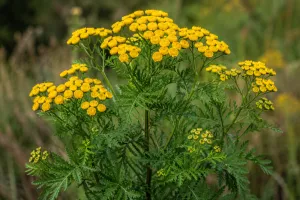
Tansy (Tanacetum vulgare)
Tansy is one of Europe’s most traditional wild herbs and has been part of folklore and botanical knowledge for centuries. Its bright yellow flowers and intense aroma give Tanacetum vulgare a special place in a modern herbal encyclopedia.
Tansy, scientifically named Tanacetum vulgare, is a perennial wild plant in the daisy family. It is widespread across much of Europe, Asia and North America and prefers roadsides, meadows, riverbanks and sunny embankments. Its striking yellow flower heads and strong, spicy scent have made it a distinctive feature of Europe’s flora for centuries.
Tanacetum vulgare has a distinctive appearance. It can reach up to one and a half metres in height and has feathery, dark-green leaves with an intense scent. Its flat, golden-yellow flower heads, which appear in dense groups in summer, are particularly characteristic. Unlike many other members of the daisy family, tansy has button-like flower heads rather than conspicuous petals.
Tansy probably originates from Eurasia. Over the centuries, it spread through many European regions and later became established in North America. Its hardiness allows it to grow wild in relatively undisturbed landscapes, and in some regions it is regarded as a traditional medicinal and ritual plant.
Tansy played a significant historical role in European folklore. Various cultures associated it with protection, purification and traditional herbal uses. In the Middle Ages in particular, Tanacetum vulgare was regarded as a versatile natural substance mentioned in herbals and natural-history records. In some regions, tansy was traditionally used at festivals or in religious customs.
Tansy has also been described in traditional botanical knowledge over many generations. Certain cultures historically used it for various purposes, including herbal blends and traditional household remedies. Many historical uses are based on inherited experience and cultural traditions rather than modern medical knowledge.
Known constituents of tansy include essential oils, bitter substances, flavonoids and other secondary plant compounds. Thujone is frequently mentioned in connection with Tanacetum vulgare. The plant also contains natural tannins and other aromatic compounds responsible for its characteristic scent.
Scientific studies explore the possible properties of particular plant compounds and their potential roles in biological processes. Some tansy constituents have long been a focus of ethnobotanical and natural-history investigations. Traditional use, personal accounts and modern research must nevertheless be clearly distinguished.
Personal accounts frequently associate tansy with herbal knowledge, natural-history uses and historical traditions. In folklore, it was at times considered a special part of traditional herbal knowledge. These historical descriptions are not recommendations or medical statements.
As with many herbs and natural substances, quality, origin and processing are important for tansy. High-quality raw materials are carefully harvested and gently processed to preserve sensitive plant components as well as possible. For herbal blends and extracts in particular, many people look for transparent origins, controlled processing and appropriate storage.
Our shop offers carefully selected herbal products with high-quality processing and transparent origins.
View tansy products in the shop:
https://fliegenpilz-kaufen.de/en/products/herbal-trio-defence-krauterkapseln-60-x-500mg
Modern interest in traditional herbs and historical natural substances has grown considerably in recent years. Many people now explore ethnobotanical history, botanical knowledge and old herbal traditions in greater depth. Tansy is one of Europe’s best-known wild plants with a long cultural history.
Tanacetum vulgare is also frequently described in modern herbal encyclopedias. Its striking appearance, intense scent and varied historical accounts are fascinating. Tansy also recalls how closely nature observation, folklore and plant knowledge were connected in many European cultures.
In certain regions, tansy was traditionally used both in herbal practice and in households or nature observation. Historical sources mention it in connection with protection against insects and as an ingredient in particular herbal blends. Such uses reflect traditional experience and must be clearly distinguished from modern scientific assessments.
A responsible approach to tansy deserves particular attention. The plant contains natural substances that may be problematic in larger amounts. Its thujone content is frequently mentioned in cautionary information. Tanacetum vulgare should therefore not be used thoughtlessly. Pregnant or breastfeeding people and sensitive individuals should inform themselves and seek professional advice if uncertain.
Legal classifications may also differ by country. Plants and herbal preparations are not automatically regulated in the same way everywhere. Anyone exploring traditional natural substances should therefore independently learn about possible restrictions, risks and the applicable legal situation.
The information described here is intended solely for general education, natural history and ethnobotanical context. It is not a recommendation for ingestion, dosage or use. Historical uses, traditional accounts and modern scientific investigations must be distinguished.
If you would like to learn more or view available products containing tansy, you can find our current selection here:
Browse tansy products:
https://fliegenpilz-kaufen.de/en/products/herbal-trio-defence-krauterkapseln-60-x-500mg
The information provided here is intended solely for general education, natural history and ethnobotanical context. It is not a recommendation for ingestion, dosage or use. Legal requirements may differ by country. Anyone exploring this natural substance should independently learn about possible risks, restrictions and the applicable legal situation.
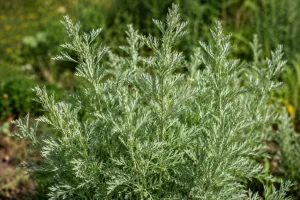
Wormwood (Artemisia absinthium)
Wormwood is one of Europe’s most traditional herbs and has been part of botanical knowledge, folk medicine and herbal culture for centuries. Its intensely bitter aroma and cultural history give Artemisia absinthium a special place in a modern herbal encyclopedia.
Wormwood, scientifically named Artemisia absinthium, is a perennial plant in the daisy family and one of Europe’s best-known bitter herbs. The silvery-green plant has been part of traditional herbal knowledge for centuries and has a long cultural and ethnobotanical history. It became particularly well known through historical herbal preparations and as a characteristic ingredient of the famous drink absinthe.
Artemisia absinthium has a distinctive appearance. Its finely divided leaves have silvery hairs, and it often reaches a metre or more in height. Small yellowish flower heads appear during flowering, giving it a rather inconspicuous but characteristic look. Its intense aromatic scent, spicy, astringent and distinctly bitter, is especially striking.
Wormwood is thought to originate from Eurasia. Over the centuries, it spread through many regions of Europe, North Africa and North America. Today, Artemisia absinthium grows both wild and cultivated, preferring sunny, dry sites such as roadsides, embankments, meadows and relatively undisturbed areas.
Wormwood played a significant historical role in many cultures. It was described in herbals and natural-history records as early as antiquity. In certain European regions it was traditionally an important bitter herb associated with various uses. Artemisia absinthium was frequently mentioned particularly in medieval herbal traditions.
Wormwood became widely known through its association with absinthe, a historical herbal drink that became especially popular in the nineteenth century. Artists, writers and intellectuals of the period often described the drink in literary and cultural contexts. This gave wormwood a distinctive symbolism still associated with European cultural history.
Traditional use frequently associates wormwood with bitter substances, herbal knowledge and historical natural-substance traditions. Personal accounts describe its intense aroma and special place in traditional herbal teachings. Certain cultures historically used it in various herbal blends and plant preparations. These accounts are based mainly on traditional experience and are not medical statements.
The principal known constituents of wormwood include bitter substances, essential oils, flavonoids and various secondary plant compounds. Thujone is particularly often mentioned in connection with Artemisia absinthium. The plant also contains natural tannins and aromatic compounds that shape its characteristic scent and taste.
Scientific studies explore the possible properties of particular plant compounds and their potential roles in biological processes. Bitter substances and aromatic herbs have been a focus of natural-history and ethnobotanical research for years. Traditional accounts, personal experiences and modern scientific investigations should nevertheless be clearly distinguished.
Many people today are interested in wormwood both for its historical significance and as part of a general interest in traditional herbs and natural substances. Modern herbal knowledge frequently discusses Artemisia absinthium in connection with bitter plants and historical plant culture.
As with many herbs, quality, origin and processing are important for wormwood. High-quality plants are carefully harvested and gently dried to preserve sensitive constituents as well as possible. For herbal products in particular, many people look for transparent origins, appropriate storage and controlled processing.
Our shop offers carefully selected herbal products with high-quality processing and transparent origins.
View wormwood products in the shop:
https://fliegenpilz-kaufen.de/en/products/herbal-trio-defence-krauterkapseln-60-x-500mg
Modern interest in traditional herbs and historical natural substances has grown considerably in recent years. Many people now explore ethnobotanical history, herbal knowledge and historical plant encyclopedias in greater depth. Wormwood is one of Europe’s best-known bitter plants.
Artemisia absinthium also holds a special place in modern herbal encyclopedias. Its long history, intense aroma and varied cultural connections are fascinating. Its historical association with absinthe and its appearance in old herbals in particular have made wormwood a lasting symbol of traditional herbal culture.
Certain cultures historically also described wormwood in connection with fumigation, rituals and traditional household remedies. Such uses reflect cultural and historical experience and should not be equated with modern medical statements.
A responsible approach to wormwood deserves particular attention. The plant contains natural substances such as thujone that may be problematic in larger amounts. Artemisia absinthium should therefore not be used thoughtlessly. Pregnant or breastfeeding people and sensitive individuals should inform themselves and seek professional advice if uncertain.
Legal rules may also differ by country. Herbal preparations and processed forms are not regulated identically everywhere. Anyone exploring natural substances such as wormwood should therefore independently learn about possible restrictions and the applicable legal situation.
The information described here is intended solely for general education, natural history and ethnobotanical context. It is not a recommendation for ingestion, dosage or use. Historical accounts, traditional herbal knowledge and modern scientific investigations must be distinguished.
If you would like to learn more or view available products containing wormwood, you can find our current selection here:
Browse wormwood products:
https://fliegenpilz-kaufen.de/en/products/herbal-trio-defence-krauterkapseln-60-x-500mg
The information provided here is intended solely for general education, natural history and ethnobotanical context. It is not a recommendation for ingestion, dosage or use. Legal requirements may differ by country. Anyone exploring plants and natural substances should independently learn about possible risks, restrictions and the applicable legal situation.
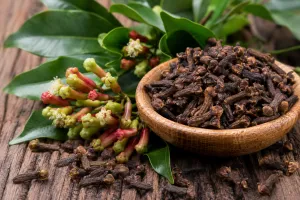
Cloves (Syzygium aromaticum)
Cloves are among the world’s best-known spice plants, with a long tradition. Their intense aroma, long trading history and importance in traditional botanical knowledge give Syzygium aromaticum a special place in a modern herbal encyclopedia.
Clove, scientifically named Syzygium aromaticum, is one of the world’s best-known spice plants. Cloves are not flowers of the familiar ornamental genus Dianthus, but the dried flower buds of an evergreen tropical tree in the myrtle family. Their intense aroma and long cultural history have given cloves an important role in cooking, botanical knowledge and traditional natural medicine for centuries.
The clove tree originally comes from Indonesia’s Moluccas, historically known as the “Spice Islands”. In antiquity and the Middle Ages, cloves were already a valuable commodity transported over long distances. Their rarity and distinctive aroma at times made them more precious than many other spices. Traders from Asia, the Arab world and later Europe contributed significantly to the worldwide spread of cloves.
Today, Syzygium aromaticum is cultivated mainly in tropical regions, including Indonesia, Madagascar, Sri Lanka, Tanzania and India. The tree can grow several metres tall and has glossy, dark-green leaves. Its unopened flower buds are harvested and then gently dried. Drying gives cloves their characteristic dark-brown colour and intense, spicy aroma.
Cloves have a distinctive appearance. The small, nail-shaped buds consist of a narrow stalk and a thickened upper part formed by the closed flower. This shape probably also gave rise to the German name “Nelke”, as they resemble small nails. Their scent is considered warm, spicy and aromatic.
Cloves have been used in many cultures throughout history. In Asia, they traditionally played an important role in spice blends, herbal preparations and cultural rituals. Cloves were also valued natural substances in the Arab world and Europe for many centuries and were frequently mentioned in traditional botanical knowledge.
Folklore and traditional use often associate cloves with warmth, aroma and intense plant constituents. Personal accounts describe their distinctive taste and scent. Historically, cloves were also often used in tea blends, incense and traditional spice recipes.
One of the principal known constituents of cloves is eugenol, an aromatic plant compound largely responsible for their typical scent and taste. Syzygium aromaticum also contains essential oils, tannins, flavonoids and other secondary plant compounds. Clove oil in particular has long been discussed in connection with traditional herbal knowledge and aromatic uses.
Scientific studies explore the possible properties of particular plant compounds and their potential roles in biological processes. Aromatic compounds from spices have been a focus of natural-history research for years. Traditional accounts, personal experiences and scientific investigation must nevertheless be clearly distinguished.
Many people today associate cloves mainly with culinary traditions and natural spices. They are often used in spice blends, baked goods and hot drinks, particularly during winter. Many nature enthusiasts are also interested in the plant’s historical and ethnobotanical significance.
As with many herbs and spice plants, quality, origin and processing are important for cloves. High-quality cloves are carefully harvested and gently dried to preserve aroma and natural constituents as well as possible. For plant products in particular, many people look for transparent origins, purity and appropriate storage.
Our shop offers carefully selected herbal products with high-quality processing and transparent origins.
View clove products in the shop:
https://fliegenpilz-kaufen.de/en/products/herbal-trio-defence-krauterkapseln-60-x-500mg
Modern interest in traditional spices and natural substances has grown considerably in recent years. Many people now explore ethnobotanical history, spice knowledge and traditional plant uses in greater depth. Cloves hold a special place because of their intense aroma and long trading history.
Syzygium aromaticum is also frequently described in modern herbal encyclopedias. It fascinates through its combination of culinary tradition, tropical origins and natural-history significance. The historical role of the Spice Islands and the worldwide spread of the spice trade in particular made cloves one of humanity’s best-known spices.
Certain cultures historically also described cloves in connection with incense, fragrance blends and traditional household remedies. Such uses are based mainly on historical experience and cultural accounts. They are not medical statements or recommendations.
As with many strongly aromatic plant substances, cloves should be approached responsibly. Concentrated essential oils in particular may irritate sensitive individuals. Care is therefore generally appropriate with plant extracts and essential-oil uses. Pregnant or breastfeeding people and sensitive individuals should inform themselves and seek professional advice if uncertain.
Legal classifications may also differ by country. Processed forms of plant raw materials are not regulated identically everywhere. Anyone exploring natural substances such as Syzygium aromaticum should therefore independently learn about possible restrictions and the applicable legal situation.
The information described here is intended solely for general education, natural history and ethnobotanical context. It is not a recommendation for ingestion, dosage or use. Historical accounts, traditional botanical knowledge and modern scientific investigations must be distinguished.
If you would like to learn more or view available products containing cloves, you can find our current selection here:
Browse clove products:
https://fliegenpilz-kaufen.de/en/products/herbal-trio-defence-krauterkapseln-60-x-500mg
The information provided here is intended solely for general education, natural history and ethnobotanical context. It is not a recommendation for ingestion, dosage or use. Legal requirements may differ by country. Anyone exploring plants and natural substances should independently learn about possible risks, restrictions and the applicable legal situation.
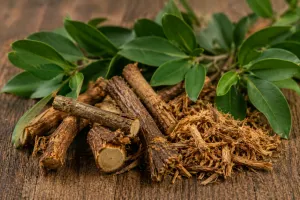
Muira puama (potency wood)
Muira puama, often called potency wood, is one of the Amazon region’s most traditional natural substances. The plant has been described in South American botanical traditions for centuries and continues to fascinate through its ethnobotanical history and cultural standing.
Muira puama, also called potency wood, is one of the Amazon region’s best-known traditional natural substances. Botanically, the plant is usually associated with Ptychopetalum olacoides, although related species are sometimes also traded under the name muira puama. In Brazil in particular, it has a long ethnobotanical history and has been described in traditional botanical knowledge for generations.
Muira puama grows mainly in tropical regions of the South American rainforest, especially Brazil and neighbouring parts of the Amazon basin. It usually takes the form of a small tree or sturdy shrub and is one of the rainforest’s more inconspicuous plants. Traditionally, the bark and root areas are mainly used, carefully dried and processed after harvesting.
The name “potency wood” arose mainly from historical accounts and traditional uses in South America. In certain Brazilian regions, muira puama was traditionally associated with vitality, energy and general well-being. In folklore and traditional botanical knowledge in particular, it was long regarded as a special natural substance with cultural significance.
Historically, muira puama was used in various traditional preparations, often as extracts, herbal blends or teas. Certain Amazonian cultures associated it with physical strength, balance and vitality. Such accounts are based mainly on ethnobotanical traditions and cultural experience.
Many people remain interested in muira puama because of its long history and special place in traditional knowledge of natural substances. Personal accounts often associate it with general vitality, natural energy and traditional plant culture. These descriptions are provided solely for general information and are not recommendations for use.
Known constituents of muira puama include plant compounds such as alkaloids, sterols, fatty acids and other secondary plant compounds. It also contains natural aromatic components and plant resins. Some of these substances are subjects of general scientific investigations.
Scientific studies explore the possible properties of particular plant compounds and their potential roles in biological processes. Traditional natural substances from the Amazon region have been studied ethnobotanically for years. Traditional accounts, personal experiences and modern research should nevertheless be clearly distinguished.
Many people today are interested in muira puama both for its historical uses and as part of growing interest in traditional plant substances from South America. It is frequently discussed in connection with ethnobotanical history, natural history and traditional Amazonian botanical knowledge.
As with many exotic natural substances, quality, origin and processing are important for muira puama. High-quality raw materials ideally come from controlled harvesting and are gently dried to preserve sensitive plant components as well as possible. For herbal products in particular, many people look for transparent origins, purity and appropriate storage.
Our shop offers carefully selected muira puama products with high-quality processing and transparent origins.
View muira puama in the shop:
https://fliegenpilz-kaufen.de/en/products/muira-puama-potenzholz-100g
Modern interest in traditional Amazonian plants has grown considerably in recent years. Many people now explore ethnobotanical history, traditional botanical knowledge and historical natural substances from South America in greater depth. Muira puama is one of the best-known plants frequently mentioned in connection with vitality and traditional Amazonian culture.
Potency wood is also frequently described in modern plant encyclopedias. Its mysterious origins, long cultural history and special place in traditional botanical knowledge are fascinating. Its connection with the Amazon region and Brazilian folklore in particular continues to make muira puama a well-known natural substance.
Certain cultures historically also described muira puama in connection with ceremonies, traditional herbal recipes and general concepts of vitality. Such accounts reflect cultural and historical experience and are not medical statements or recommendations.
As with many traditional natural substances, muira puama should be approached responsibly. Individual differences in responses to plant raw materials cannot be ruled out. Sensitive individuals and pregnant or breastfeeding people should generally exercise caution and inform themselves independently.
Legal classifications may also differ by country. Plant-based natural substances and their processed forms are not regulated identically everywhere. Anyone exploring muira puama should therefore independently learn about possible restrictions, risks and the applicable legal situation.
Origin and sustainability also deserve particular attention. As muira puama comes mainly from tropical regions, many people look for responsible harvesting, controlled processing and transparent supply chains. Reputable manufacturers value gentle processing and suitable storage to preserve the quality of plant raw materials as well as possible.
The information described here is intended solely for general education, natural history and ethnobotanical context. It is not a recommendation for ingestion, dosage or use. Historical accounts, traditional botanical knowledge and modern scientific investigations must be distinguished.
If you would like to learn more or view available products containing muira puama, you can find our current selection here:
Browse muira puama products:
https://fliegenpilz-kaufen.de/en/products/muira-puama-potenzholz-100g
The information provided here is intended solely for general education, natural history and ethnobotanical context. It is not a recommendation for ingestion, dosage or use. Legal requirements may differ by country. Anyone exploring plants and natural substances should independently learn about possible risks, restrictions and the applicable legal situation.
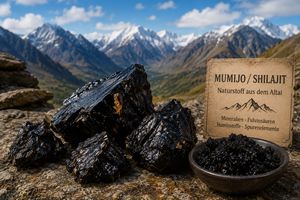
Shilajit (Mumiyo)
Shilajit, also called Mumijo, is a dark, resin-like natural substance from high mountain regions such as the Altai and Himalayas. For centuries, traditional cultures have associated it with strength, minerals, vitality and natural regeneration.
Shilajit, frequently called Mumijo, Mumiyo or Mumie in German-speaking regions, is not a conventional herb, mushroom or individual plant, but a distinctive natural substance of mineral-organic origin. It therefore has no scientific name in the botanical sense, as it is not assigned to a particular plant or fungal species. Instead, it is a natural, dark, resin-like substance that emerges from rock crevices in certain high mountain regions and may form over long periods from organic plant remains, mineral components and microbial decomposition.
The name Mumijo is particularly widespread in Eastern European, Russian and Central Asian traditions. Shilajit, by contrast, comes from an Ayurvedic context and is especially associated with India, Nepal, Tibet and the Himalayas. Both terms describe similar natural substances, although origin, composition, consistency and quality may vary considerably by region. Mumijo therefore has a special place in a modern plant or natural-substance encyclopedia: it is neither plant nor mushroom, but a traditionally valued natural product at the intersection of geology, botany and folklore.
Shilajit has a very characteristic appearance and scent. It is usually dark brown to deep black, resinous, glossy or tar-like, with an intense, earthy, slightly smoky to mineral scent. Depending on processing, Mumijo may be offered as raw resin, purified resin, powder, capsules or extract. High-quality shilajit is often described as having a viscous, resin-like consistency that softens with warmth and can dissolve partly or completely in water. Its precise colour, solubility and structure may nevertheless differ by origin and processing.
Origin is particularly important for Mumijo. Traditionally known deposits occur in the Himalayas, Tibet, the Caucasus, Central Asia and the Altai Mountains. Altai Mumijo is often associated with particularly remote mountain landscapes, clear air and mineral-rich rock formations. In these regions, shilajit emerges from rock crevices, caves and steep rock faces, particularly during warmer periods when the resin-like substance softens. Traditionally, Mumijo is considered the “essence of the mountains”: a natural substance formed over a long time from plant and mineral components.
Historically, different cultures classified shilajit in different ways. India’s Ayurvedic tradition has long regarded it as a particularly valued natural substance, traditionally associated with strength, endurance, mental clarity, vitality and general resilience. Central Asian and Russian folklore also highly valued Mumijo and used it in various traditional contexts. A central idea was often that this dark mountain substance contains the mountains’ mineral strength in concentrated form.
Modern personal accounts frequently mention shilajit in connection with energy, inner stability, concentration, physical performance and general well-being. These descriptions come mainly from traditional use, folklore and individual experiences. They are neither scientifically established evidence nor recommendations for ingestion. Scientific investigations explore which constituents might be responsible for particular effects and how shilajit’s complex composition can be explained. Humic substances, fulvic acids, minerals and trace elements are particular areas of interest.
Known constituents of Mumijo include humic substances, fulvic acids, various minerals, trace elements, organic acids, amino acids and other complex organic-mineral compounds. Fulvic acids are frequently described as a particularly characteristic component of shilajit. They form during natural decomposition of organic material and can bind minerals. Its precise composition may nevertheless vary greatly. Origin, rock, climate, altitude, source material and processing influence which constituents are present and in what amounts.
Origin, processing and quality are particularly important for Mumijo or shilajit products. As a natural substance from mountain regions, it requires attention to purity, careful selection, gentle processing and transparent origins. Our shop offers Mumijo or shilajit from the Altai, with a clear product description and natural-history background.
View Mumiyo / shilajit from the Altai in the shop:
https://fliegenpilz-kaufen.de/en/products/mumiyo-shilajit-aus-dem-altai
Shilajit’s quality cannot be assessed by appearance alone. Reliable origins, suitable purification and processing that excludes coarse impurities, rock particles and unwanted residues as far as possible are particularly important. Raw, untested or improperly processed shilajit may be problematic, as natural substances from rock layers can also contain unwanted substances depending on location. Examples include heavy metals and other natural contaminants. Mumijo should therefore not simply be compared with an ordinary herbal powder. Quality is a central issue for this natural substance.
Storage is also important. Shilajit should be kept dry, protected from light and tightly closed. Resin-like forms may soften with warmth, while powder may be sensitive to moisture. Clean, dry storage helps keep consistency, scent and quality as stable as possible. Clear labelling is also useful for high-quality natural substances so that origin, product form and processing remain traceable.
Modern interest in shilajit has grown considerably in recent years. Mumijo is frequently mentioned in natural-substance communities, traditional botanical knowledge, Ayurvedic settings and discussions of minerals and fulvic acids. Traditional descriptions must nevertheless be distinguished from established scientific assessments. Terms such as effects, uses and health benefits should be used cautiously with shilajit. Traditional systems associate Mumijo with vitality, energy and regeneration; modern research examines individual constituents and possible relationships. No general medical recommendation can be derived from this.
Personal accounts often describe shilajit as intense, earthy and distinctive. Some people associate it with a sense of strength, focus or natural energy. Others are mainly interested in its cultural history, mineral origins or special role in Ayurveda and Central Asian traditions. Such accounts are individual and can vary greatly. They do not replace professional advice and should not be understood as evidence of a particular effect.
Particular caution is appropriate for people who are sensitive to potent natural substances, take medication, are pregnant or breastfeeding, or have health concerns. Restraint is also sensible when quality is unclear, origin information is missing or products are very cheap. Shilajit is a complex natural substance whose composition may vary considerably by source. Anyone exploring Mumijo should therefore consider not only traditional descriptions, but also purity, processing, origin and legal classification.
The legal classification of shilajit or Mumijo may differ by country, product form and intended use. In the EU, Mumijo/shilajit has been considered in a differentiated way in relation to novel-food questions: its classification as a food supplement may differ from its use in other food categories. Retailers and consumers should therefore consider the current legal situation and the specific product labelling. This information is provided for general information and is not legal advice.
The information provided here is intended solely for general education, natural history and ethnobotanical context. It is not a recommendation for ingestion, dosage or use. Shilajit or Mumijo is a traditionally known natural substance with a long cultural history, but also with quality and purity issues that should be carefully considered. Anyone exploring it should learn about origin, processing, possible risks and the applicable legal situation.
If you would like to learn more or view available products, you can find our current selection here:
Browse Mumiyo / shilajit products:
https://fliegenpilz-kaufen.de/en/products/mumiyo-shilajit-aus-dem-altai
What you will find in our plant encyclopedia
Background information on the origins, quality and distinctive features of selected natural products.
Our plant encyclopedia continues to grow. Each entry offers clear information on origins, traditional uses, processing and quality characteristics. Once you have explored the background, you can find selected products with clearly stated origins and careful processing in our shop.