
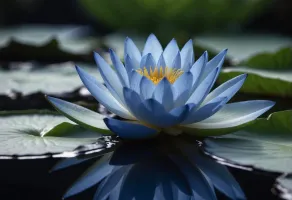
Blue lotus (Nymphaea caerulea)
Blue lotus is one of ancient Egypt’s most mysterious plants. Its striking blue flowers and long cultural history continue to make it a fascinating natural substance in a modern plant encyclopedia.
Blue lotus, scientifically named Nymphaea caerulea, is an aquatic plant of unusual cultural and historical significance. Despite its name, it does not botanically belong to the true lotuses, but to the water-lily family. It became particularly well known through its close connection with ancient Egyptian culture, where it was revered as a symbolic aquatic plant for thousands of years. Today, blue lotus is one of the best-known ethnobotanical natural substances and frequently appears in modern plant encyclopedias in connection with traditional botanical knowledge, cultural history and historical ritual plants.
The plant is characterised by striking blue-violet flowers that open during the day and close at night. Blue lotus prefers warm, still waters and was historically widespread particularly along the Nile. Nymphaea caerulea also occurs in other parts of Africa and in tropical and subtropical regions. Its floating leaves and distinctive flowers made it an important symbol of rebirth, spirituality and the connection between water and life as early as antiquity.
Blue lotus played a significant cultural role in ancient Egypt. Numerous wall paintings, temple depictions and historical objects show its characteristic flower. Certain cultural contexts associated it with spiritual rituals, celebrations and symbolic ceremonies. Historical depictions suggest it was sometimes used as an aromatic natural substance and may have been included in traditional preparations. Many such accounts are based on archaeological interpretations and cultural reconstructions.
Blue lotus was also valued in various regions outside Egypt. Different cultures regarded it as a symbol of calm, harmony and awareness. Folklore occasionally associates it with relaxing or meditative properties. Modern personal accounts describe interest in the plant in connection with relaxation, atmosphere and traditional botanical knowledge. These descriptions are based on individual experiences and cultural traditions and are not medical statements.
Blue lotus’s natural constituents attract particular interest. Alkaloids such as apomorphine and nuciferine are frequently mentioned and discussed in scientific investigations in relation to particular physiological properties. Studies explore what role these compounds might have played in traditional uses. Scientific evidence is nevertheless limited, and many historical assumptions cannot be clearly confirmed.
Blue lotus is now offered in various forms, including dried flowers, resins, tea blends and extracts. The flowers are particularly popular for their aromatic and decorative character. Modern natural-history circles frequently discuss the plant in connection with ethnobotanical traditions and historical ritual plants. Many people are interested both in possible constituents and in its cultural significance and unusual history.
Origin, processing and quality are particularly important for blue lotus products. High-quality products often feature carefully harvested flowers, gentle drying and processing that leaves them as natural as possible. As the delicate flowers can readily lose aroma and quality, many manufacturers focus on storage away from light and controlled processing steps.
Our shop offers carefully selected blue lotus products with transparent origins and gentle processing.
View blue lotus Nymphaea caerulea in the shop:
A blue lotus product’s quality depends on several factors, including plant origin, flower freshness, post-harvest processing and the purity of the finished product. Particularly high-quality flowers retain their natural colour and characteristic scent for as long as possible. Dry storage away from light is also important for preserving sensitive plant substances.
Modern interest in natural substances often associates blue lotus with relaxation, meditation and traditional botanical knowledge. Certain circles also discuss it in connection with historical ritual plants and spiritual symbolism. Many people particularly appreciate the distinctive atmosphere and cultural history associated with Nymphaea caerulea.
Historical accounts, modern personal experiences and ethnobotanical interpretations do not replace medical advice. Scientific investigations continue to explore the possible significance of blue lotus’s natural constituents. Many relationships remain unresolved. Statements about effects or uses should therefore always be considered cautiously and with appropriate distinctions.
As blue lotus is classified differently in some countries, interested people should also consult the applicable legal situation. Particular products may be assessed differently depending on region. Different rules may apply especially to concentrated extracts or highly processed products.
As with many traditional natural substances, blue lotus has possible limitations and cautionary considerations. People with existing conditions, taking medication or in particular health circumstances should seek expert information before exploring plant products in greater depth. Individual reactions or intolerances cannot be ruled out either.
Blue lotus nevertheless remains one of historical natural history’s most fascinating plants. Its combination of ancient Egyptian symbolism, unusual appearance and modern ethnobotanical interest makes Nymphaea caerulea a distinctive part of contemporary plant encyclopedias and natural-history collections. Its blend of cultural history, spiritual symbolism and botanical beauty continues to attract considerable interest worldwide.
If you would like to learn more or view available products, you can find our current selection here:
Blue lotus – full shop selection
The information provided here is intended solely for general education, natural history and ethnobotanical context. It is not a recommendation for ingestion, dosage or use. Legal requirements may differ by country. Anyone exploring this natural substance should learn about the applicable legal situation and possible risks.